

Read summarized version with
 ChatGPT
 Perplexity
 Gemini
 Claude
 Grok
Grok
Employee-generated content is changing who audiences trust and who they buy from.
Here’s why I say this.
Most corporate content sounds like it was written by a committee that never met a customer.
Mission statements nobody reads. Stock photos nobody believes. “We’re excited to announce” posts that excite exactly no one.
And yet, every day, employees within those same companies are posting content that receives real comments, real engagement, and real trust. Not because they’re trying to market. But because they’re talking like humans.
That’s the shift employee-generated content brings. It takes marketing out of the boardroom and puts it back into real conversations. And when done right, it becomes one of the strongest growth channels a brand can build, quietly and consistently.
What is Employee Generated Content (EGC)?
Employee-generated content (EGC) is content created by people who work at the company. Not the marketing team nor an agency. Real employees sharing what their day looks like, what they’re working on, or what it’s like being part of the brand.
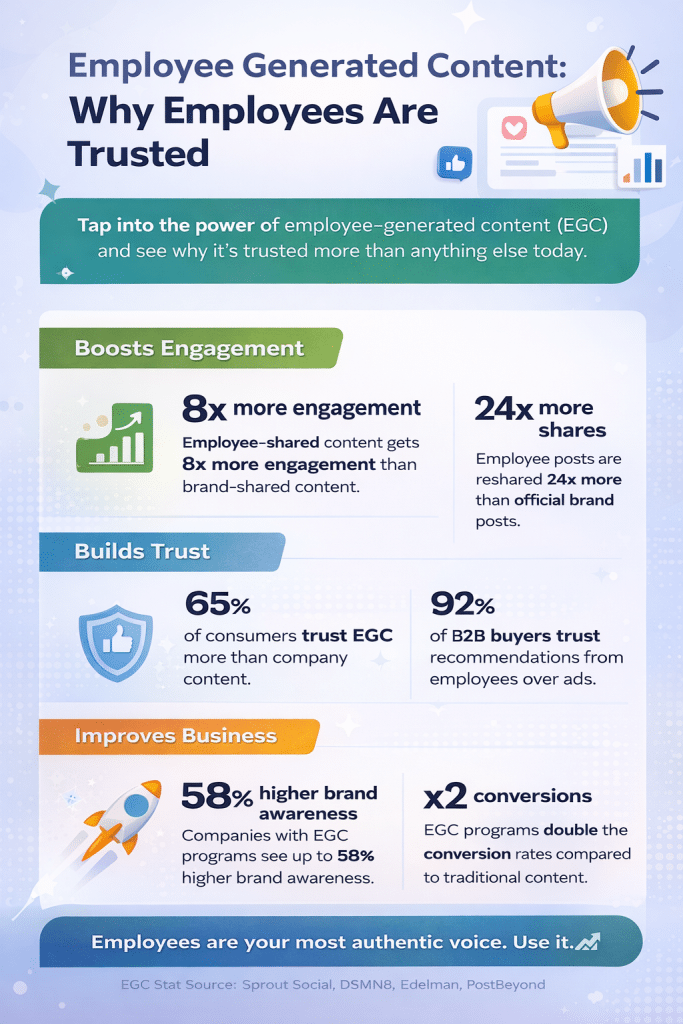
It’s not scripted. It’s not overly produced. And it definitely doesn’t look like an ad. That’s the point. EGC feels natural because it comes straight from real work, real moments, and real voices. Multiple industry studies have shown that employee-generated posts drive significantly higher engagement than branded content, often generating up to 8x more interactions on social commerce platforms.
EGC can live on public platforms such as LinkedIn, Instagram, TikTok, and YouTube, as well as on brand-owned channels, including websites, career pages, email newsletters, and internal hubs.
Common types of employee-generated content include:
- Social media posts and threads – Sparks authentic conversations, boosting reach and engagement.
- Short-form videos and reels – Humanize the brand quickly and perform well on social.
- Blog posts written by employees – Adds credibility and depth for serious readers.
- Behind-the-scenes workplace photos – Build trust by showing real, day-to-day work life.
- Employee testimonials and stories – Influences decisions through believable first-hand experiences.
- Product walkthroughs or demos – Make products relatable and easier to understand.
- Thought leadership and skill-based insights – Positions employees and brand as industry authorities.
What makes EGC different isn’t the format. It’s the intent. Employees aren’t selling, they’re sharing. And that’s exactly why people listen.
Why Employee-Generated Content Matters for Modern Marketing
Marketing today is less about visibility and more about credibility. You can buy reach, but you can’t buy belief.
Employee-generated content works because it meets audiences where they already are: skeptical, overwhelmed, and tired of polished brand messaging.
1. Trust and authenticity lead the way.
According to Edelman’s Trust Barometer, people trust employees 2x as much as CEOs when it comes to speaking honestly about a company. That alone explains why EGC performs so well. It feels unfiltered. Because most of the time, it is.
2. Engagement that actually means something
Multiple studies show that employee-shared content receives significantly higher engagement than content shared from brand pages. Some reports indicate higher engagement, particularly on LinkedIn. That’s not because algorithms favor employees. It’s because people respond to people.
3. Reach without paying for it.
When employees share content, brands instantly expand their organic reach into networks they could never access through ads alone. Friends, peers, ex-colleagues, industry circles. This reach is warmer, more relevant, and more likely to convert.
4. Employer branding that doesn’t feel fake
Candidates no longer trust careers pages. They trust employees. EGC shows what working at a company actually looks like, including good days. That honesty attracts better-fit talent and reduces early attrition.
EGC vs Employee Advocacy vs User-Generated Content
These three terms are often conflated, creating confusion for both SEO and strategy. They’re related, but not the same.
1. Employee Generated Content
EGC is content that employees create themselves, in their own voice, based on their real experience. There is no strict script, no forced sharing, and no central message being pushed.
2. Employee Advocacy
Employee advocacy marketing is more structured. Employees share pre-approved brand content across their personal networks. It’s coordinated, often incentivized, and controlled by marketing or HR teams.
3. User-Generated Content
User-generated content comes from customers, fans, or community members outside the company. Reviews, testimonials, social posts, and community photos fall under this bucket.
Understanding this distinction helps brands use each approach intentionally, instead of treating everything as “content.”
Key Benefits of Employee-Generated Content
Let’s get to the key benefits of employee-generated content –
1. Builds Brand Trust and Credibility
Trust doesn’t come from what a brand says about itself. It reflects what people within the brand are willing to say publicly. When employees speak openly about their work, their challenges, and their wins, it signals confidence and transparency. Over time, this builds credibility that ads can’t replicate.
2. Boosts Reach and Organic Engagement
Employee posts consistently outperform brand page posts in organic reach. Algorithms favor conversations, not announcements. Since EGC sparks genuine discussion, it naturally travels further and lasts longer in feeds.
3. Strengthens Employer Branding and Recruiting
Candidates want to see real people, not HR slogans. Employee stories give potential hires a realistic preview of the company culture. Brands like Shopify and HubSpot have used EGC to attract aligned talent without aggressive hiring campaigns.
4. Cost-Effective and Scalable
EGC doesn’t require production teams or agency budgets. It scales through participation, not spending. As more employees join in, content volume grows naturally without increasing costs.
5. Improves Employee Engagement and Retention
Employees who feel seen and heard are more likely to stay. Featuring employee content publicly creates recognition, pride, and a stronger sense of belonging. That internal impact often gets overlooked, but it matters.
Types of Employee-Generated Content You Can Use
Here are the different types of employee-generated content that you can use for your company –
1. Day-in-the-Life Content
Short videos or posts showing a typical workday perform exceptionally well on LinkedIn and TikTok. Brands like Shopify and Atlassian regularly see strong engagement on these posts because they answer a simple question people care about: what does working here really look like?
2. Behind-the-Scenes Posts
Behind-the-scenes content highlights the work that is usually invisible. Product development, UGC campaign planning, and team rituals. Lush uses store-level behind-the-scenes videos to humanize retail work and build customer connections.
3. Employee Spotlights and Testimonials
Highlighting individual employees and their journeys adds a personal layer to the brand story. Microsoft frequently shares employee spotlights that focus on growth, learning, and impact, not job titles.
4. Skill and Expertise Insights
Employees sharing what they know builds authority for both the individual and the brand. HubSpot employees regularly publish insights on marketing, sales, and growth, positioning the company as a knowledge leader.
5. Product Usage Stories
When employees explain how they use the product, it helps bridge trust gaps. These stories often perform better than traditional UGC ads because they feel grounded rather than promotional.
How to Build an Employee-Generated Content Strategy That Works
Let’s learn how you can create a sure-shot employee-generated content strategy to amplify your marketing –
1. Identify Employee Personas
Not every employee needs to create content. Start by identifying roles with natural storytelling value. Sales, support, product, retail staff, and leadership often have the most relevant perspectives.
Why this is important:
Focusing on the right employees ensures content feels authentic and relevant. Random participation can lead to off-brand messaging or low-quality posts, wasting effort and reducing impact.
2. Choose the Right Tools and Platforms
Decide where EGC will live. LinkedIn works best for B2B. Instagram and TikTok suit retail and lifestyle brands. Websites and career pages are ideal for long-term visibility, similar to how UGC on website strategies work.
Why this is important:
Using the right UGC platforms ensures content reaches the audience that matters most. Posting on irrelevant channels can lead to poor engagement and missed opportunities for amplification.
3. Create Simple Content Templates
Employees don’t need scripts, but they do need prompts. Simple templates like “One thing I learned this week” or “A problem I solved recently” remove friction and encourage consistency.
Why this is important:
Templates make participation easy and reduce hesitation. Without them, employees may overthink content creation or avoid posting altogether, slowing down your strategy.
4. Build Incentives and Recognition
Recognition matters more than rewards. Featuring employee content on brand channels, internal newsletters, or websites creates motivation without forcing participation.
Why this is important:
Acknowledging contributions encourages ongoing participation. Employees feel valued and proud, which drives more authentic content and strengthens internal culture.
5. Plan Publishing and Distribution
Decide how content will be reused. A LinkedIn post can become a website testimonial. A short video can support a landing page. Repurposing multiplies impact.
Why this is important:
Repurposing ensures every piece of content works harder. Without a clear distribution plan, great employee stories can get lost, limiting visibility and ROI.
6. Set Approval and Quality Workflows
Guardrails protect everyone. Define what’s okay to share, what’s not, and how content is approved without slowing things down.
Why this is important:
Clear approval workflows prevent legal issues, compliance problems, or off-brand messaging. It keeps employees confident in sharing content while protecting the company’s reputation.
Best Practices for Employee-Generated Content
Here’s what you need to know –
1. Keep It Authentic
The fastest way to kill EGC is over-editing. Let employees sound like themselves. Minor imperfections make content believable.
2. Provide Training and Resources
Short workshops or internal guides help employees feel confident. This isn’t about teaching marketing. It’s about teaching clarity and comfort.
3. Respect Privacy and Consent
Always get permission before repurposing content. Make boundaries clear. Employees should feel safe, not exposed.
4. Establish Legal and Brand Guardrails
Clear guidelines prevent compliance issues without restricting creativity. Simple rules work better than long documents.
Collecting, Measuring, and Activating Your Employee-Generated Content
Employee-generated content doesn’t scale on goodwill alone. You need the right tools behind it.
1. EGC & Employee Advocacy Platforms
UGC Platforms like Taggbox, EnTribe, and Clearview Social are built to help brands collect and activate employee content at scale. These tools allow teams to gather posts from employees, moderate submissions, and publish approved content across multiple touchpoints.
The difference comes down to where that content lives.
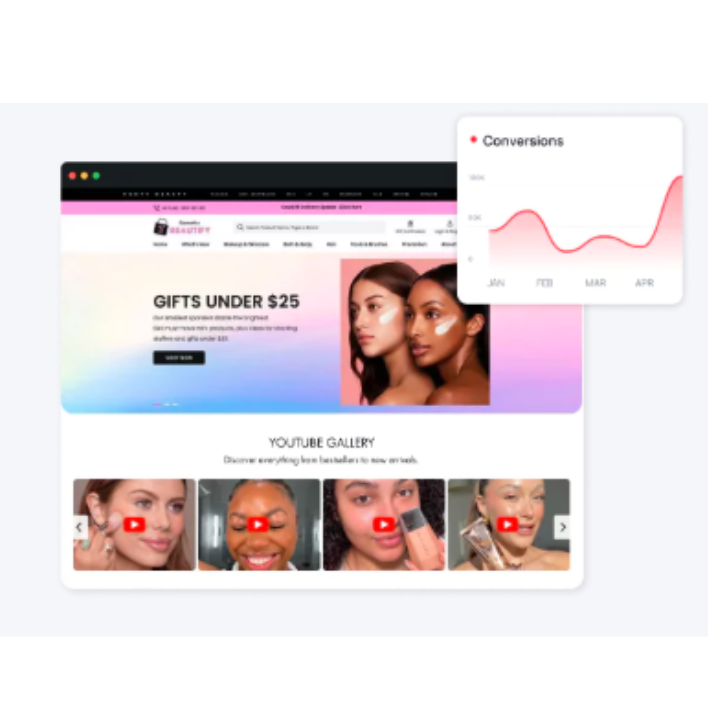
While many advocacy tools focus mainly on social sharing, Taggbox goes further, helping brands turn employee content into on-site experiences, campaign assets, and conversion-driving displays across websites, landing pages, and digital screens.
2. Analytics & Performance Tracking Tools
EGC without measurement is just noise. Hashtag Tracking tools help brands understand which employees are participating, which content formats perform best, and how employee posts impact reach and engagement.
Taggbox includes built-in analytics that go beyond vanity metrics. Brands can track engagement, content performance, and campaign impact, making it easier to double down on what works and scale high-performing employee stories with confidence.
3. Content Collaboration & Internal Enablement Tools
Tools like Slack, Notion, and internal content hubs help employees share ideas, coordinate campaigns, and stay aligned without slowing each other down. These platforms reduce friction and make participation easier for teams.
Taggbox complements these tools by acting as the activation layer, organizing approved employee content, making it easy to reuse across campaigns, and ensuring valuable employee stories don’t stay buried in internal channels.
Measuring Success: KPIs and Metrics That Matter
1. Engagement Metrics – Look beyond likes. Saves, shares, and comment depth indicate real interest.
Impact: High engagement signals that content resonates and builds authentic connections with audiences.
2. Reach Compared to Brand Channels – Employee content often reaches audiences that brand pages never will. Track this difference.
Impact: Wider reach expands brand visibility and taps into new networks organically.
3. Employee Participation Rate – Participation shows internal health. Growth here means the strategy is working.
Impact: More active employees indicate stronger culture buy-in and long-term content sustainability.
4. Talent Attraction Impact – Measure career page traffic, application quality, and candidate feedback.
Impact: Effective EGC improves employer branding and attracts better-fit candidates faster.
5. Converting Employee Audiences into Traffic – Track referral traffic from employee posts to brand pages and product pages.
Impact: Employee content drives measurable business outcomes, turning internal voices into leads and conversions.
Potential Challenges and How to Solve Them
Generated Content works best when it feels natural. But without guardrails, it can drift fast. These are the most common challenges brands face, and how to fix them without turning EGC into corporate noise.
1. Inconsistent Messaging
When employees create content in their own words, messaging can feel scattered or off-brand. The mistake most brands make is trying to fix this with scripts. Scripts kill authenticity and participation.
How to solve it:
Define clear themes, campaigns, and talking points, not exact wording. Give employees context, what the campaign is about, who it’s for, and the key idea to communicate, then let them interpret it in their own voice. Consistency comes from shared intent, not copied language.
2. Legal and Compliance Risks
Using employee content without proper permissions can lead to compliance issues, especially when content is repurposed for marketing, ads, or websites.
How to solve it:
Set up simple, transparent consent processes from day one. Make it clear where and how content may be used, and provide easy opt-in mechanisms. Clear guidelines upfront protect both the brand and the employee, and remove hesitation from participation.
3. Quality Control
Not every piece of employee content will be campaign-ready. Forcing employees to “create better content” usually backfires and reduces involvement.
How to solve it:
Curate instead of controlling. Feature strong UGC examples, highlight top-performing posts, and showcase employee stories that resonate. When employees see what works, quality improves naturally, without pressure or policing.
Case Studies and Real-World Examples
Here are some real-world case studies screaming why EGC is a must –
1. Jula: Showing the People Behind the Brand
Jula has built a dedicated section on its website to showcase employee-generated content, turning everyday work moments into a powerful brand asset. Employees regularly share photos and videos from the job, team collaborations, in-store experiences, and day-to-day work life.
What makes Jula’s approach stand out is its inclusivity. From entry-level staff to senior leaders, every voice is represented. This diversity of perspectives helps customers see the expertise, culture, and passion behind the brand, making Jula feel approachable and human, not corporate.
2. Sanofi: Turning Employee Stories into Impact
At Sanofi, employee storytelling goes far beyond employer branding. A self-shot video by Lana, a Product Manager, sharing a deeply personal story about a child with Pompe disease, brought the company’s mission to life.
The video’s power came from its honesty, not production quality. Stories like these have helped Sanofi reach over 14 million people and drive a 66% increase in career site visits, proof that authentic employee voices resonate at scale.
3. Meller: Making Employees Part of the Lifestyle
Meller blends employee-generated content seamlessly into its UGC-driven strategy. By featuring employees wearing its sunglasses at work, at festivals, and in real life, the brand reinforces trust and authenticity.
When customers see employees genuinely using the product, confidence follows.
Conclusion
Employee-generated content isn’t a trend. It’s a reflection of how trust works today.
People don’t want perfect brands. They want honest ones. And honesty doesn’t come from campaigns. It comes from people.
Brands that understand this don’t just create better content. They build stronger relationships, internally and externally. And that’s where real growth begins.
If you’re ready to turn employee stories into a scalable, brand-safe asset, Taggbox makes it simple. From collecting and moderating employee content to displaying it across websites and campaigns, Taggbox helps you activate authentic voices without losing control.