The best Halloween marketing ideas for 2026 use mystery, surprise and urgency instead of standard discounts. Top ideas include a trick-or-treat checkout, a fading “ghost sale,” a haunted homepage, a costume contest and a scavenger hunt, along with slogans and email subject lines.
What if your Halloween campaign wasn’t a sale at all?
Imagine a checkout that hides a surprise in every order, or a discount that disappears a little more each day until midnight on October 31. That’s the thinking I’ve kept behind the Halloween marketing ideas for 2026 listed below. A bit playful, time-limited and customized around your industry.
I’ve also listed 30 slogans and puns, email tips and a way to measure your Halloween marketing content. Let’s see what works best for you.
What Are The Best Halloween Marketing Campaign Ideas For 2026?
The best Halloween marketing campaign ideas for 2026 are the ones that use mystery, surprise and urgency. Halloween is on Saturday, October 31, so campaigns that get the most attention are ones with vanishing offers, hidden rewards, costume contests and scavenger hunts. Let’s have a look at the 12 best Halloween marketing ideas:
1. Run a trick-or-treat checkout
Give every order placed by a customer a secret outcome. Some customers get a “treat,” like free shipping, a surprise gift or double loyalty points, and the rest get a harmless “trick,” like a silly sticker or a joke on the confirmation page. Everyone gets something small, so no one feels left out, and the reveal is what people want to share. Tell customers directly that a surprise is coming, but not what it is, so curiosity will do the selling.
2. “Scariest mistake we made” Stories
Ask your team members to share a real, funny or humbling work mistake and what they learned. It’s human, memorable and works for B2B as well as retail, and it’s more honest than a pun-heavy post.
3. Launch a ghost sale that slowly fades
Instead of a flat discount, start a sale on Monday, October 26 at its highest value and let it shrink a little each day until it disappears at midnight on October 31. A countdown on your homepage and in your emails makes the urgency visible, and customers get to decide when to buy. It builds a daily reason to come back, which a one-day sale can’t do.
Author’s Tip:
Combine it with a UGC video where a customer is showing the use of that product and on the top add a banner that displays the discount countdown to increase conversion probability. You can opt for Taggbox shoppable UGC for that.
4. Bring back a “ghost” product for one week
Pick a discontinued product, flavor or design and bring it back for Halloween week only. And let customers vote on which “ghost” returns by tagging your hashtag or voting in your stories. You get demand data for free, and long-time customers get to feel remembered. Show the votes and customer comments live on your website. A social media widget tool like Taggbox can fetch those votes and comments from different platforms into one place.
Planning a Halloween Hashtag Campaign?
Start Free
5. “Scary myths” Educational Posts
Pick five Halloween-themed myths about your industry, such as “manual reporting is faster,” and debunk them with short facts. It works well for B2B and SaaS and gives you content that answers real questions.
6. Build a haunted homepage with something to find
Give a new look to your homepage for the week, then hide something on it: a bat in the footer, a clickable pumpkin, or a ghost that moves when you scroll. Anyone who finds it unlocks a code or enters a prize draw. Add a live feed of customer Halloween photos below the hero section, so the page keeps changing without manually updating it. An embedded Taggbox feed does that automatically and saves you from redesigning the page for one week. Taggbox also offers a Halloween-specific theme to give a spooky look to your feed.
7. Start a “you’ve been booed” chain
Ask your customers to send a small treat or a printable “you’ve been booed” sign to a friend, neighbor or coworker, who then passes it forward. It started as a neighborhood tradition, so most people already know how it works. Brands can add a branded sign, a QR code and a campaign hashtag, then track how far each chain travels. It suits food, gifting, local and community businesses, and it works best when the first batch goes to your most active customers. Get help planning the QR code chain.
8. Ask customers to dress as your product
Costume contests are common, but “dress as our product” isn’t. For example, a coffee brand can ask people to dress up in cup costumes, a software company gets people dressed as their dashboard, and a skincare brand gets a face-mask-and-cucumber crew. Use categories (best pet, best office, best group) so more people have a chance to win. Show entries on a live screen at your store, event or office so people can watch themselves appear. Also, don’t forget to get UGC rights for the content.
Get Your Entries to Appear Live on Your Website or In-Store Screen?
Show Me How
9. Set a scavenger hunt across your channels
Hide one clue each in your email, Instagram story, packaging insert and website footer. Customers piece them together for a code that unlocks a prize. It encourages people to visit places they might otherwise ignore, which is useful for growing your newsletter and social media following. Add a QR code on packaging that lets people upload their own photo for a bonus clue, so the hunt also collects content. Taggbox’s QR-based upload feature can help you with that, so people don’t need to post publicly to take part.
10. Host a “Monster Lab” product vote
Ask customers to build a monster version of your product, such as a “Frankenstein” bundle or a “Vampire Edition” shade, by choosing from options you give them. The winning combination becomes a limited release in November. You can also give a spotlight to the winner at Thanksgiving. This way, your customers feel like co-creators, and you get real signals about what people want before you spend on inventory.
11. Turn your team into the campaign
Run a team-versus-team costume battle, and let customers vote for the winner with a hashtag. Share short behind-the-scenes clips of costume prep, desk decorating and office pranks. It humanizes the brand without a hard sell and gives B2B companies a way to take part without a physical product to sell.
12. Plan a “survivors” campaign for November 1, 2026
Most Halloween campaigns end on October 31, so November 1 is where you can stand out. Send a “you survived” email with the best moments from the week, announce the winners and give people a final reason to act, such as a short extension on a reward. Then move straight into your holiday content.
Author’s Tip:
With Halloween a few weeks away, announce the event by October 20 so people have time to take part and plan accordingly.
What Are The Best Halloween Marketing Slogans?
Good Halloween marketing slogans are short, playful and linked to what you sell. They pair a Halloween word like boo, spooky or treat with a clear benefit, usually through a pun. Aim for under eight words, so a slogan fits a caption, an email subject line or a store sign.
List of Halloween Slogans & Puns You Can Use
Retail & eCommerce Brands
- Boo-tiful finds, frightfully good prices
- Don’t be scared of a good deal
- Trick or treat yourself
- Our deals are scary good, but not for long
- Haunt-ingly good gifts, gone by midnight
Food, Drinks & Cafes
- Fangs for stopping by
- Sip, sip, boo-ray
- Pumpkin spice and everything eerie
- A treat so good it’s spooky
- Our menu’s a little wicked
Real Estate
- Boo-ilt to last, priced to scare
- Find a home that’s hauntingly perfect
- Nothing scary about this mortgage
- Open house, open door, no ghosts included
- Ready to move in? Boo-k a tour
Email Subject Lines
- Boo! Your surprise is inside.
- Trick or treat? Open to find out.
- Last chance before the ghost sale disappears.
- You survived Halloween. Here’s your reward.
- Don’t let this offer vanish at midnight.
B2B & SaaS
- Is your content strategy a little scary?
- Stop haunting your team with manual work
- Scary reports? Not on our watch
- Less fright, more insight
- Don’t let your leads turn into ghosts
Short Puns For Captions & Graphics
- You’re the boo to my brand
- Let’s get this party star-ted, ghoul
- Time to get your spook on
- Witch way to the sale?
- Fall-ing for spooky season
Use a simple formula: 1 Halloween word + 1 benefit + 1 pun
Author’s Tip: Build Your Own Slogan
Use a simple formula: 1 Halloween word + 1 benefit + 1 pun
Start with what you sell, such as speed, savings or comfort. Then pick a Halloween word that can be bent into a pun, like boo, ghoul, haunt, spook, witch, fang or treat.
Before you publish, check that it passes three tests: it reads in one breath, the pun doesn’t hide the benefit, and nobody could mistake it for another brand’s tagline. Skip well-known brand slogans and any character or franchise names, since those can create trademark problems.
Start with what you sell, such as speed, savings or comfort. Then pick a Halloween word that can be bent into a pun, like boo, ghoul, haunt, spook, witch, fang or treat.
Before you publish, check that it passes three tests: it reads in one breath, the pun doesn’t hide the benefit, and nobody could mistake it for another brand’s tagline. Skip well-known brand slogans and any character or franchise names, since those can create trademark problems.
1. Heinz, “Tomato Blood”
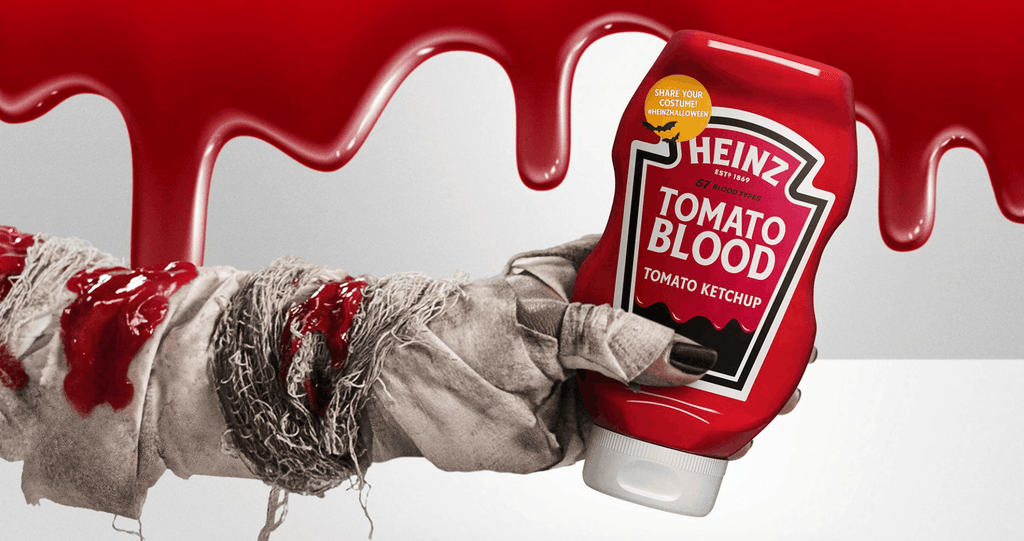
Heinz released a limited run of “Tomato Blood” ketchup in 2020 as part of a sweepstakes, then brought it to the mainstream in 2021 with a costume kit, and it has returned every October since. The brand encourages people to share DIY costumes on social media, and #heinzhalloween passed 5 billion+ views on TikTok. See how to embed a hashtag wall for your brand as well.
2. Fanta, “Summon What You Wanta”
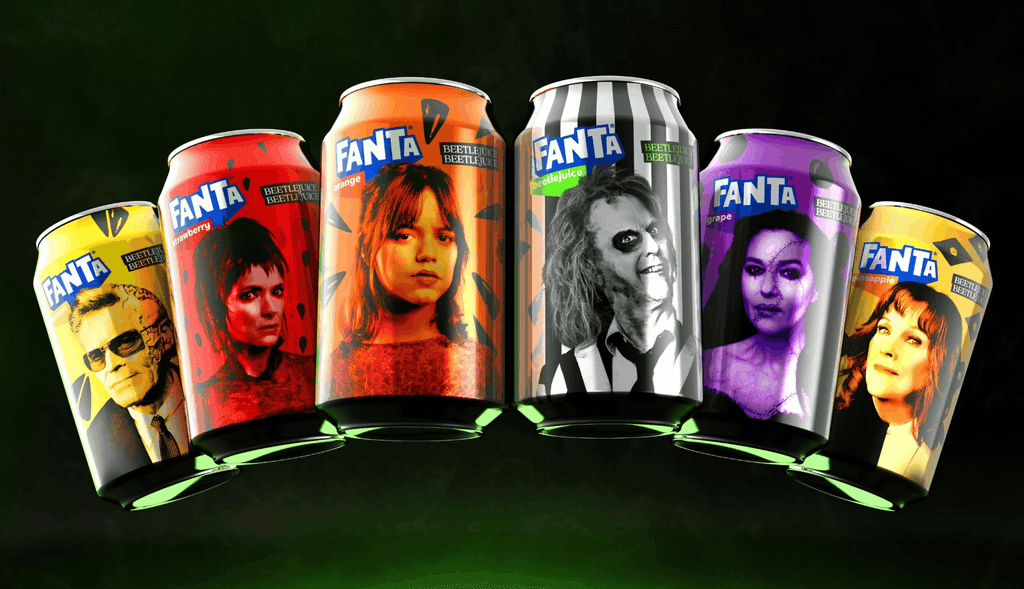
Fanta teamed up with Warner Bros. around the Beetlejuice Beetlejuice release, with a limited-edition flavour and cans designed after the film’s characters. Each can carried a QR code that unlocked exclusive content, physical experiences and a chance to win cinema tickets. The campaign turned packaging into a way into the experience.
3. IKEA, “Monsters Not Included”
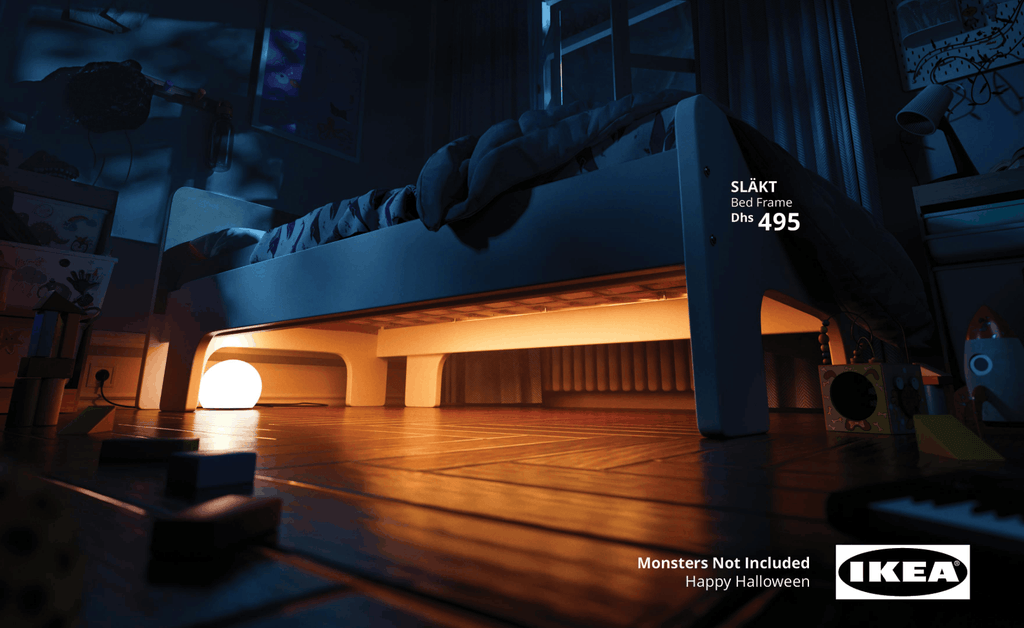
IKEA’s 2023 ad used shadowy figures and atmospheric lighting, then ended with a switch being flicked and a “monsters not included” promise. Instead of going for pure scares, it used reassurance and made the brand feel like the safe choice. It’s a useful example for brands that don’t want to sound spooky.
Conclusion
Halloween marketing works best when it’s fun, fast and a little surprising. People see the same spooky discounts from every brand, so the ones that stand out do something different. Skip the usual sale, plan one surprise for your customers, and let their photos and posts do the talking. Real customer content builds more trust than any ad.
Ready to start? Pick one idea from this list, launch your hashtag by October 20, and show the best posts live on your website or in your store. On November 1, check your numbers, see what worked, and keep the winning ideas for next year.