The best Elfsight Google Reviews Widget alternative depends on what you need beyond displaying Google reviews. Taggbox is a strong choice for combining reviews with social media content, SociableKIT suits businesses seeking unlimited paid widget views, Trustmary focuses on collecting feedback, Common Ninja offers a wider library of website widgets, and Trustindex supports reviews from a large number of platforms.
Online reviews play a major role in purchase decisions. BrightLocal’s 2026 research found that 93% of consumers have made a purchase after reading reviews, highlighting why businesses need an effective way to collect, manage and display customer feedback across their websites.
In this guide, we’ve compared the best Elfsight Google Reviews Widget alternatives based on the factors that actually influence buying decisions, from scalability and customisation to review management, analytics, and overall value. Instead of naming a single tool the winner, we’ll help you identify the right solution for your business.
Why are Businesses Looking for Elfsight Google Reviews Alternative?
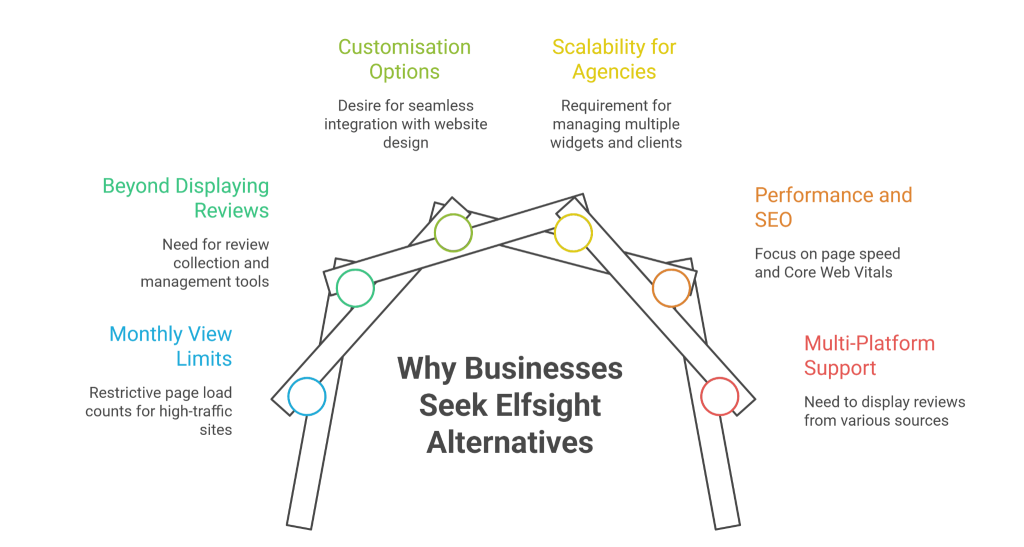
Elfsight makes it easy to embed Google reviews, but as businesses grow, their requirements often extend beyond simply displaying customer feedback. Here are the most common reasons users compare alternatives.
- Monthly View Limits Can Become Restrictive
Many review widgets operate on monthly view limits, meaning every page load counts toward your allowance. While this may not be noticeable for smaller websites, businesses with growing traffic, ecommerce stores, or multiple landing pages often look for plans that scale more predictably.
- Displaying Reviews Isn’t Always Enough
Embedding Google reviews builds trust, but many businesses also want to collect new reviews, automate review requests, gather private feedback, or manage reviews from multiple platforms. These capabilities usually require a more comprehensive review management solution.
- Businesses Need More Customisation
Every website has a different design language. Some businesses prioritise flexible layouts, custom CSS, branding controls, and responsive widgets that blend seamlessly with their site rather than look like third-party embeds.
- Agencies Require Better Scalability
Agencies and multi-location businesses often manage dozens of widgets across different clients or locations. Features like multiple workspaces, team collaboration, white-label options, and predictable pricing become increasingly important as operations grow.
- Performance and SEO Matter
Review widgets typically rely on JavaScript to display content. While this doesn’t automatically make one solution better than another, businesses should consider factors like page speed, rendering, and Core Web Vitals, especially if SEO is a priority. Testing widgets on your own website is often more valuable than relying solely on marketing claims.
- Growing Brands Need More Than Google Reviews
Today’s buying journey extends beyond Google. Customers also look at Facebook Reviews, Yelp, Trustpilot, and even user-generated content from Instagram or TikTok before making a decision. Choosing a platform that supports multiple review sources or combines reviews with social content can help create a stronger, more authentic trust signal across your website.
Need More Than a Basic Review Widget?
Collect, manage and display customer reviews alongside social media content from one platform.
Try Taggbox Free
How We Evaluated These Elfsight Alternatives
Not every Google Reviews widget solves the same problem. Some are built for displaying reviews, while others focus on collecting feedback, managing online reputation, or combining customer reviews with social proof.
To keep this comparison practical, we evaluated each platform based on the criteria businesses typically consider before making a purchase:
- Ease of setup and customization
- Supported review sources
- Review collection and management capabilities
- Analytics and moderation features
- Scalability for growing businesses and agencies
- Website performance considerations
- Overall value for money
Rather than ranking tools purely by features, we’ve highlighted where each platform performs best and where Elfsight may still be the better choice.
Whether you’re a small business looking for a simple review widget or an enterprise managing reviews across multiple locations, the tools below offer different strengths. The key is choosing the one that aligns with your goals, budget, and long-term marketing strategy.
1. Taggbox
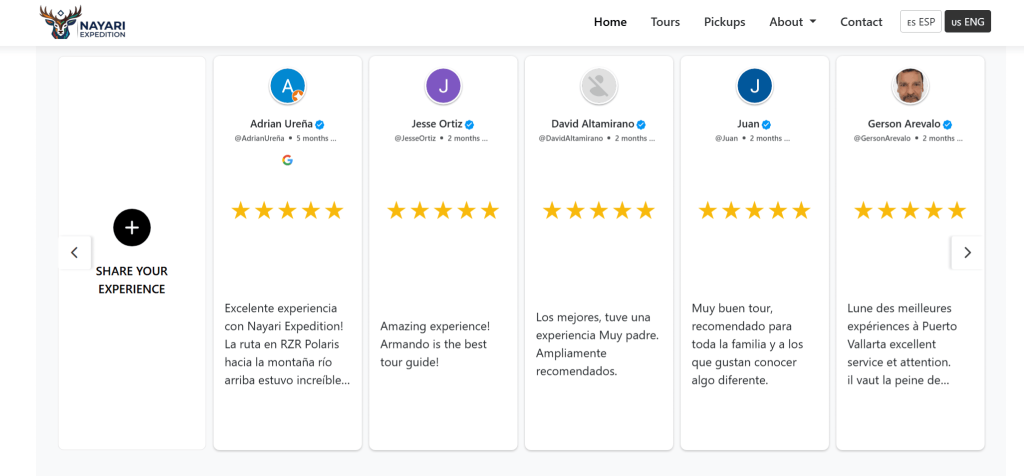
If your needs go beyond displaying Google Reviews, Taggbox offers a broader solution. As a review aggregator, it allows businesses to collect reviews, aggregate content from multiple review platforms, and showcase social media posts alongside customer testimonials. This makes it a good fit for brands that use reviews as part of a wider marketing strategy rather than as a standalone website widget.
Key Features
- Multi-source review aggregation
- Review collection with Review Hub
- Social media + review widgets
- AI moderation
- Analytics and customization
Best for: Ecommerce brands, agencies, hospitality businesses, and businesses that want to combine customer reviews with social proof.
Pricing & Free Plan
Starts with a free plan and goes up to $79 in the advanced plan
- Supports review collection in addition to review display
- Combines reviews with social media content
- Supports UGC and shoppable-content campaigns
- Provides automatic and AI moderation on higher plans
- Better suited to brands using social proof across multiple campaigns
Where Elfsight may be a better fit
- It is practical for businesses that only need a Google Reviews widget
- Larger library of general website widgets
Pros
- Reviews and social content can be managed through one platform
- Free plan is available without ads
- Supports review collection and moderation
- Strong customization
- Built-in moderation
Cons
- Advanced features require higher plans
- The free plan is limited to 500 monthly views
Choose this if…
You want one platform that brings together customer reviews, social media content, UGC, and ecommerce campaigns instead of managing multiple separate tools.
2. Tagembed
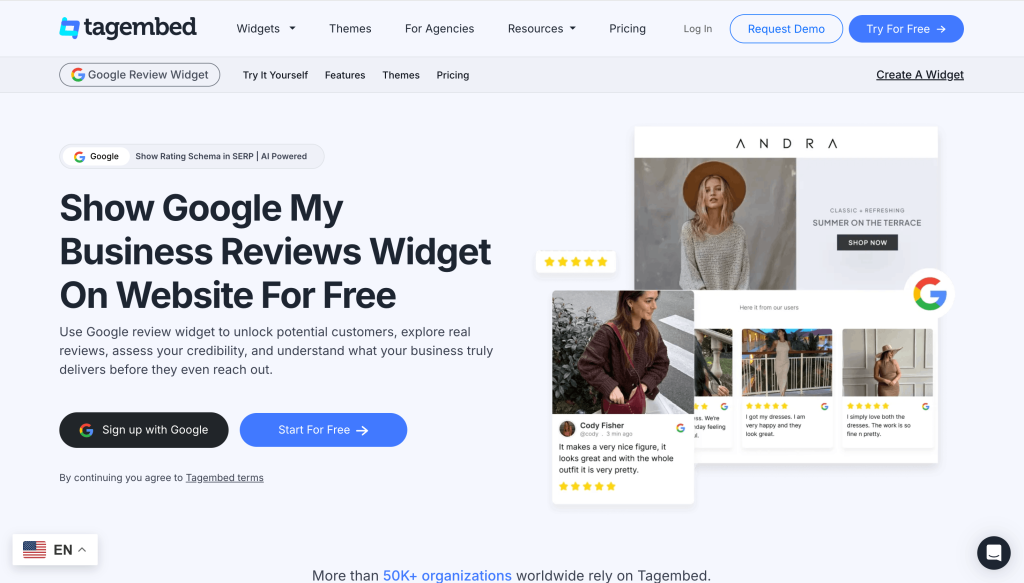
Businesses that want to display more than customer reviews often look for a solution that also supports social content. Tagembed combines Google Reviews with live social media feeds, allowing businesses to create customizable website widgets that showcase reviews alongside content from platforms like Instagram, Facebook, TikTok, LinkedIn, YouTube, and X (Twitter). Instead of focusing on review management alone, Tagembed emphasizes website presentation. Users can customize layouts, filter displayed content, moderate feeds before publishing, and keep widgets updated automatically. Its integrations with WordPress, Shopify, Wix, Squarespace, Webflow, and HTML websites make deployment simple across different website platforms.
Key Features
- Google Reviews and social media feed widgets
- No-code website embedding
- Responsive layouts with customization options
- Content moderation and filtering
- Multi-platform website integrations
Best for: Businesses that want to display Google Reviews alongside live social media content through customizable website widgets.
Pricing & Free Plan
Free plan available, with paid plans offering higher widget limits and additional customization features.
- Combines reviews and social media feeds in a single widget
- Supports multiple website builders and CMS platforms
- Greater flexibility for displaying mixed social proof
- Responsive widgets with customization controls
Where Elfsight May Be a Better Fit
- Better suited for businesses looking only for a standalone Google Reviews widget
- Broader collection of general-purpose website widgets
Pros
- Easy no-code implementation
- Supports multiple social platforms
- Responsive and customizable widgets
- Free plan available
Cons
- Advanced customization is available on higher-tier plans
Choose this if…
You want a simple way to embed Google Reviews and social media feeds together on your website without managing separate widgets.
3. SociableKIT
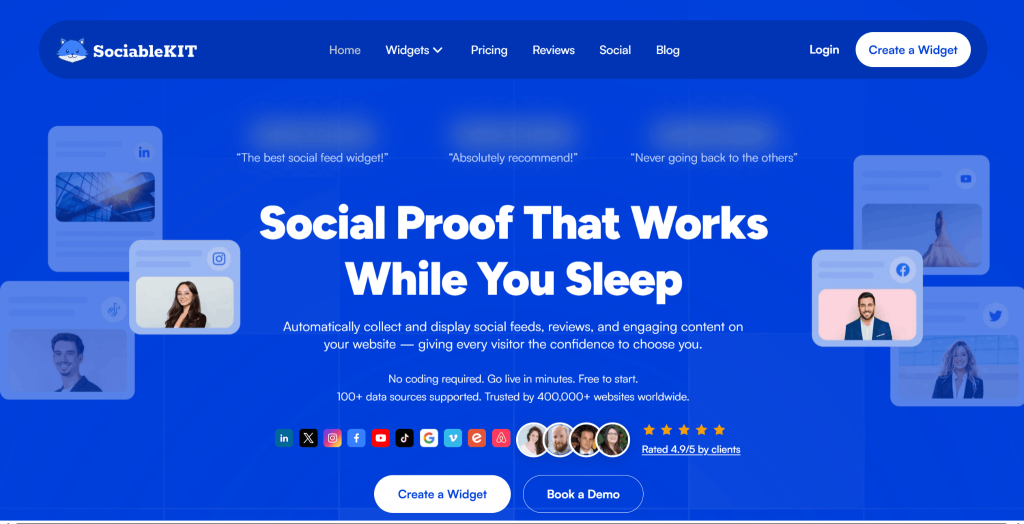
SociableKIT focuses on embedding reviews, feeds, photos and videos from a large collection of sources.
Its most meaningful difference is its view-based pricing model. The free plan includes one widget, one source and 2,000 monthly views, while paid Google Reviews widgets begin at $10 per month with unlimited views.
Additional sources can be added for $5 per month each. SociableKIT also states that styling controls are available on every plan, including the free tier.
Key Features
Best for: Businesses that want simple widgets for reviews and social media feeds.
Pricing & Free Plan
Starting with a Free tier and scaling up to $500 per month for enterprise needs
- Wide variety of supported content sources
- Easy implementation
- More mature widget customization
- Better reputation management ecosystem
Pros
- Beginner-friendly
- Multiple widget types
Cons
- No review collection
- Limited analytics
Choose this if…
You mainly need lightweight widgets for displaying reviews and displaying social media feeds.
4. Trustmary
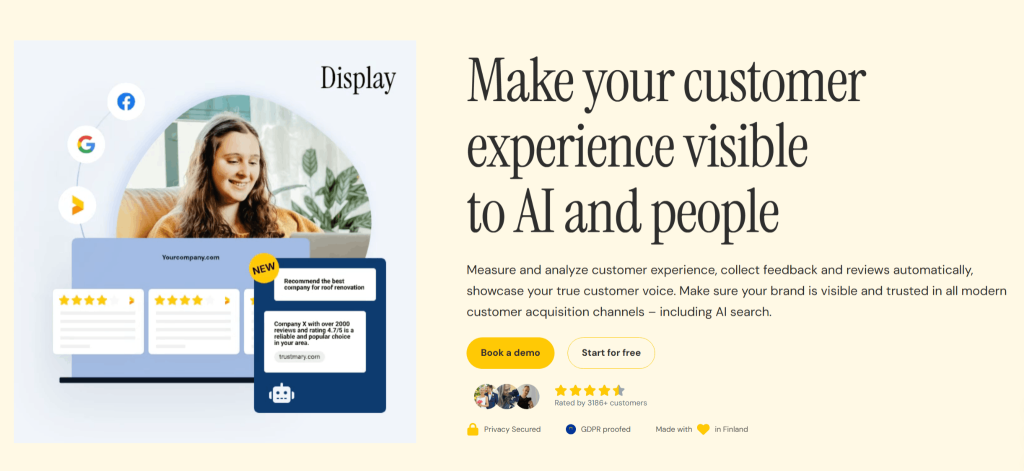
Trustmary is designed to help businesses generate more reviews instead of simply displaying existing ones. If collecting reviews is a higher priority than widget customisation, Trustmary is worth considering.
Key Features
- Automated review requests
- Testimonial widgets
- Customer feedback tools
Best for: Service businesses focused on collecting customer reviews and testimonials.
Pricing
Plans start from $29 and go up to $556
- Better review collection workflows
- Supports testimonial management
- Simpler Google Reviews widget
- Wider range of website widgets
Pros
- Strong review collection
- Customer feedback features
- Good for service businesses
Cons
Choose this if…
Your primary goal is generating more customer reviews and testimonials.
5. Common Ninja
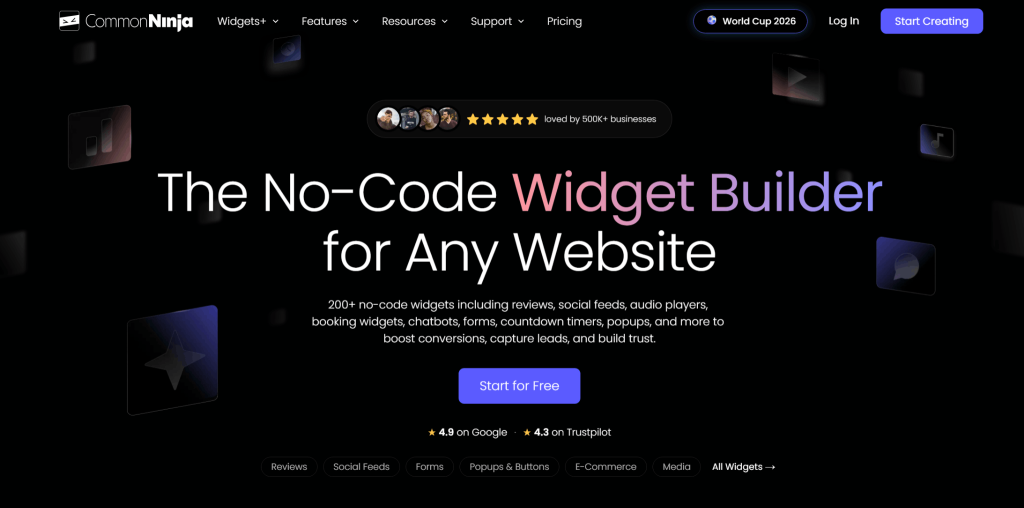
Common Ninja offers a wide collection of website widgets, including Google Reviews, forms, galleries, FAQs, and social feeds. However, its review functionality is less comprehensive than platforms dedicated to review management or social proof.
Key Features
- Large widget library
- Responsive designs
- Custom styling
- Website builder integrations
Best for: Small businesses and website owners looking for a simple widget platform.
Pricing & Free Plan
Starting from $0 and going up to $26 with its ultimate plan.
- Useful for adding multiple website elements from one platform
- Easy implementation across CMS platforms
- Better customization for review displays
- Larger user community and documentation
Pros
- Beginner-friendly
- Supports popular website builders
Cons
- Limited review management features
- Not designed for large-scale reputation management
Choose this if…
You want a platform for multiple website widgets rather than a dedicated review management solution.
6. Trustindex
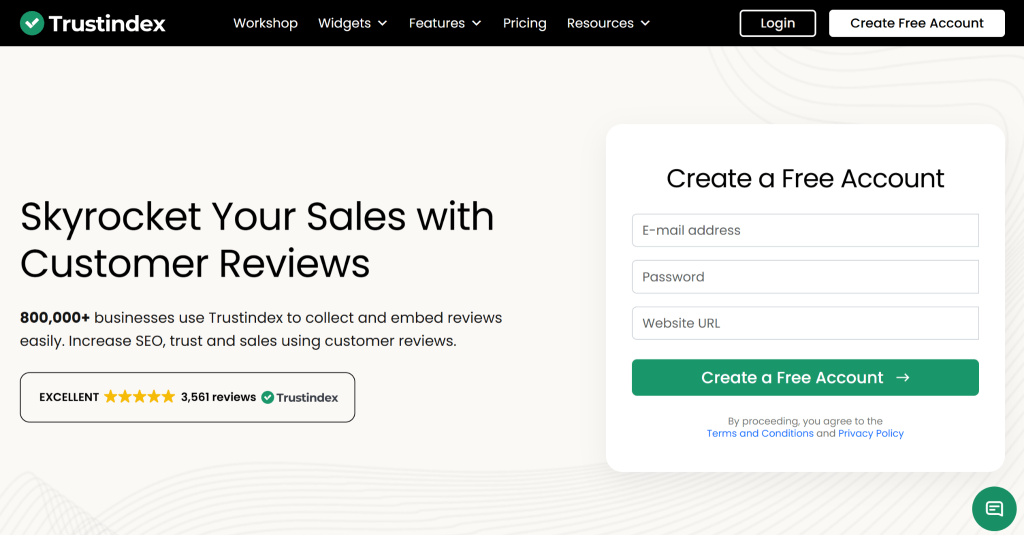
Trustindex is focused on review aggregation and reputation management. This makes it particularly useful for local businesses whose reputation spans multiple review sites.
Key Features
- Multi-platform review aggregation
- Multiple widget templates
- Review filtering
Best for: Local businesses wanting to display reviews from multiple review platforms.
Pricing & Free Plan
Starting at $65 per year and going up to $349 per year.
- Strong support for multiple review platforms
- Multiple review display templates
- Broader widget ecosystem
- Easier setup for users only displaying Google Reviews
Pros
- Supports multiple review platforms
- Easy website integration
- Good template selection
Cons
- Limited review collection features
- Less suitable for social media aggregation
Choose this if…
You want to showcase reviews from several review websites.
Ready to Build a More Powerful Google Reviews Widget?
Display reviews from multiple sources, moderate content and create widgets that match your website.
Get Started with Taggbox
Free Elfsight Alternatives: What are the Common Limitations?
Free Google Reviews widgets are a good way to test a platform before upgrading, but they usually come with trade-offs. While each provider has a different pricing model, most free plans include one or more of the following limitations:
- Vendor branding on embedded widgets
- Monthly widget view limits
- Slower content refresh rates
- Limited review sources
- Fewer widget templates and layouts
- No custom CSS or advanced styling
- Basic or no moderation tools
- Limited analytics
- No review collection features
- Community support instead of priority assistance
For businesses with low website traffic, a free plan may be enough. However, growing brands should carefully compare these restrictions, especially if they expect higher traffic or want more control over how reviews are displayed.
| Platform | Free Plan | Multi-Source Reviews | Monthly View Limits | Review Collection | Best For |
| Elfsight | Yes | No | Limited (200 views) | No | Quick Google Reviews display |
| Taggbox | Yes | Yes | Limited (500 Views) | Yes | Businesses testing review widgets and UGC |
| Tagembed | Yes | Yes |
Limited (Free Plan) | Yes | Embedding social media feeds and customer reviews with easy no-code customization |
| SociableKIT | Yes | No | Limited | No | Simple website embeds |
| Trustmary | Yes | Limited | Limited | Yes | Collecting customer reviews |
| Common Ninja | Yes | No | Limited | No | Multiple website widgets |
| Trustindex | No | Yes | Not available | Limited | Review displays |
The best alternative depends on what you’re trying to achieve.
- Need a simple Google Reviews widget? Choose a platform focused on displaying reviews with minimal setup.
- Want to collect reviews as well? Look for a review management platform like Trustmary or Taggbox Review Hub.
- Need reviews from multiple platforms? Consider tools like Taggbox that aggregate reviews from different sources.
- Want reviews and social media together? A UGC platform like Taggbox lets you combine customer reviews with Instagram, TikTok, Facebook, and other social content.
- Managing multiple clients or locations? Prioritize platforms with team collaboration, multiple workspaces, and predictable pricing.
- Concerned about SEO or performance? Test rendering, page speed, and Core Web Vitals on your own website before committing.
Rather than choosing the platform with the longest feature list, choose the one that best matches your workflow and future growth.
Expert Take
“Businesses should not choose a Google Reviews widget based only on design or the number of templates available. The more important questions are whether the platform can collect and manage reviews, support multiple locations, load efficiently and scale with the website’s traffic. A good review widget should make customer feedback easier to discover and trust without adding unnecessary complexity to the website.”
— Akshita Jain
SEO Specialist
LinkedIn Profile
Final Verdict
No single platform is the right choice for every business.
Choosing the right Elfsight Google Reviews Widget alternative depends on your business needs, website traffic, budget and long-term goals. Some businesses may only need a simple way to display Google reviews, while others may require review collection, support for multiple platforms, advanced customisation, moderation, analytics or social media integration.
Before selecting a platform, compare its pricing, view limits, supported sources, design flexibility and scalability. Testing the widget on your own website can also help you understand its impact on performance and user experience. The best option is the one that fits naturally into your workflow, supports your growth and helps you present customer feedback in a clear and trustworthy way.
Start Free. Upgrade When You Grow.
Try Taggbox review widgets on your website and explore advanced features when your traffic and campaigns scale.
Start for Free Now
Conclusion
Choosing an Elfsight Google Reviews Widget alternative isn’t about finding the platform with the most features, it’s about finding the one that fits your business.
If you only need to display Google Reviews, a lightweight widget may be all you need. But if you’re looking to collect reviews, manage customer feedback, aggregate reviews from multiple platforms, or combine reviews with social proof from social media, it’s worth considering a more comprehensive solution.
Before making your decision, compare pricing, customisation, supported review sources, performance, and scalability. Testing a platform on your own website will always provide more meaningful insights than relying solely on feature lists.