The best Videowise alternatives in 2026 include Taggbox, LyveCom, Tolstoy, Moast, Whatmore, Bambuser, Firework, and JOIN Stories. Taggbox is a good fit for shoppable UGC and multi-platform websites, LyveCom offers broader Shopify video commerce features, Moast is an affordable option for shoppable videos, and Bambuser specializes in live shopping.
Although these platforms offer similar features, their pricing models and capabilities differ considerably. Some charge by video views or impressions, while others limit uploads, product tagging, or advanced features. Here’s how the eight alternatives compare, based on their Shopify App Store listings and the requirements they’re best suited to handle.
Videowise Alternatives: Quick Comparison
| Platform | Best for | Starting price |
| Taggbox | Shoppable UGC and multi-platform websites | $39/month for Shoppable UGC |
| LyveCom | Shopify video commerce and live shopping | $19/month |
| Tolstoy | AI-powered content and shoppable videos | $12/month |
| Moast | Affordable Shopify shoppable videos | Free; Pro at $15/month |
| Whatmore | Social video imports and automated product tagging | Free; paid from $29/month |
| Bambuser | Live shopping and product demonstrations | Free; paid from $79/month |
| Firework | Interactive video commerce | Free to install; paid from $39/month |
| JOIN Stories | Video commerce across different CMS platforms | $99/month |
Pricing checked against Shopify App Store listings in October 2026. Amounts are in USD. Feature availability, billing terms, and usage limits vary by plan.
Why Look for an Alternative to Videowise?
Videowise brings shoppable videos, UGC management, AI-powered content creation, live shopping, and analytics into one platform. It works well for businesses managing substantial video content, but not every store needs that range of functionality.
Cost is one consideration. Videowise offers a free Shopify plan and a $9/month Pro plan with 5,000 unique widget impressions. However, its standalone Shoppable Video platform starts at $239/month with annual billing, while the complete platform starts at $479/month.
The difference between these subscriptions is significant. A merchant looking to add a few product videos has different requirements from a retailer managing livestreams, AI-generated content, and multiple storefronts.
There is good reason to bring authentic video content onto product pages. Baymard Institute’s research found that 67% of the ecommerce sites it evaluated didn’t feature social media images or videos from previous buyers on product pages. Its usability testing showed that seeing products used by real customers helps shoppers evaluate them more confidently.
The challenge is finding software that makes this content useful without adding unnecessary costs or complicating everyday content management.
8 Best Videowise Alternatives for Ecommerce
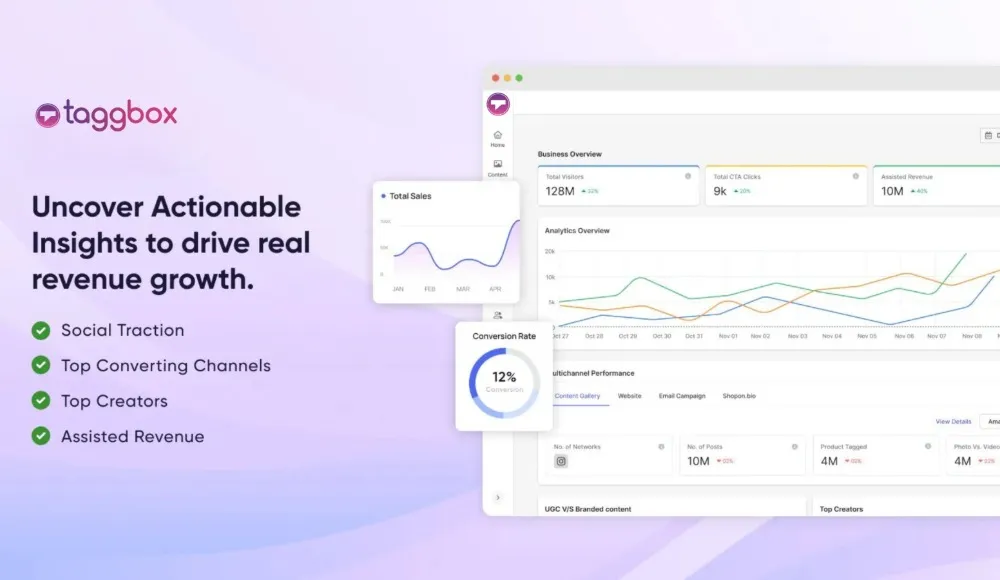
Taggbox is worth considering if your brand already has Instagram Reels, TikTok videos, customer reviews, and creator content but wants to make that content more useful on its website.
Its shoppable UGC platform lets merchants collect content from different social channels, organize it into galleries, and connect videos with relevant products. Features include multiple product tags, clickable hotspots, product catalog syncing, AI-assisted tagging, and customizable gallery layouts.
The main advantage is flexibility. Taggbox works with Shopify, WordPress, Wix, Squarespace, Webflow, and custom HTML websites. A retailer managing multiple sites can reuse and publish shoppable content without depending on a Shopify-only application.
For example, a fashion brand can collect customer styling videos, tag the clothing featured in each Reel, and display the content on relevant product and collection pages.
Taggbox Shopify app offers a free plan with 500 monthly views. However, both its free plan and $19/month Starter plan exclude Shoppable UGC. The Growth plan at $39/month includes shoppable functionality and 50,000 monthly views.
Taggbox makes the most sense when the priority is collecting, managing, and monetizing existing social content. It isn’t a complete replacement for Videowise’s dedicated live-shopping and AI video-production capabilities.
Explore Taggbox Shoppable Video platform for product-linked video galleries and UGC-driven shopping experiences.
Already Have Customer Videos? Make Them Shoppable.
Turn Instagram Reels, TikTok videos, and customer content into product-tagged galleries that shoppers can explore directly on your website.
Start Creating Shoppable Videos

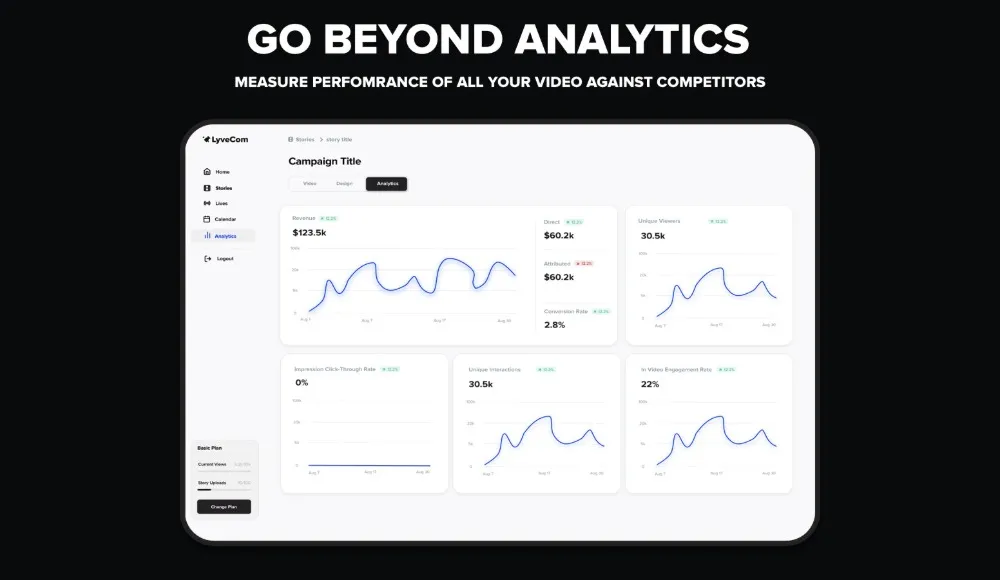
LyveCom is one of the more comparable Videowise competitors for Shopify stores. It supports shoppable video carousels, stories, product highlights, social video imports, and livestream shopping.
Its integrations extend to Shopify’s Shop app, Tapcart, Klaviyo, and other ecommerce tools. Merchants can publish product demonstrations across their storefront and use the same content in email, SMS, and mobile shopping experiences.
The Basic plan costs $19/month and includes video widgets, social imports, and impression-based usage. Plus costs $199/month, while the $499/month Pro plan introduces livestream shopping access and unlimited video uploads.
LyveCom is a reasonable choice for merchants who want capabilities similar to Videowise without immediately purchasing an extensive platform subscription. However, businesses planning live-shopping events need to compare the higher plans, as livestreaming isn’t included in Basic.
For merchants new to video commerce, understanding how to add shoppable videos to a Shopify store can also help clarify the setup requirements, from importing content and tagging products to publishing widgets on product pages.
3. Tolstoy — Best for AI-Powered Content and Shoppable Videos
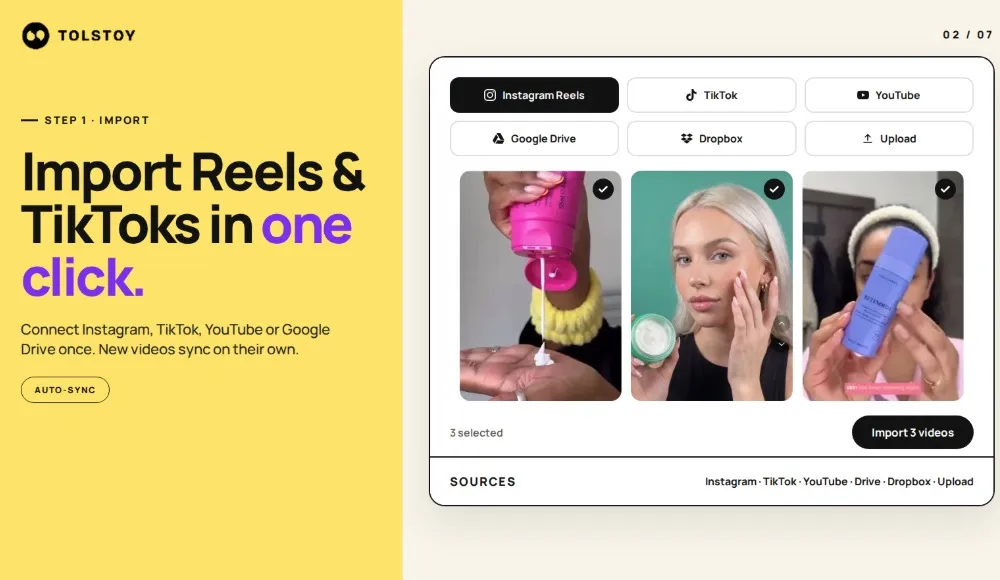
Tolstoy combines shoppable video with AI tools for creating product content and assisting shoppers. Its Shopify app supports Instagram Reels, TikTok videos, UGC, product tagging, and interactive galleries across product pages, collections, and the Shop app.
Beyond displaying videos, Tolstoy offers AI Studio and an AI Sales Agent. This makes it relevant to businesses that want to create additional product visuals while helping customers discover suitable products.
Its Starter plan costs $12/month, or $8/month with annual billing, and includes 5,000 monthly video viewers, 2,000 AI Studio tokens, and 500 AI Sales Agent tokens. Additional viewers cost $10 per 1,000.
Tolstoy is useful when AI content creation is part of your merchandising strategy. However, video viewers and AI features have separate allowances, so the actual cost depends on how frequently you use them.
If AI functionality is your main reason for switching, it’s worth examining Tolstoy’s features, pricing, and alternatives in more detail before comparing subscriptions.
4. Moast — Best for Affordable Shopify Shoppable Videos
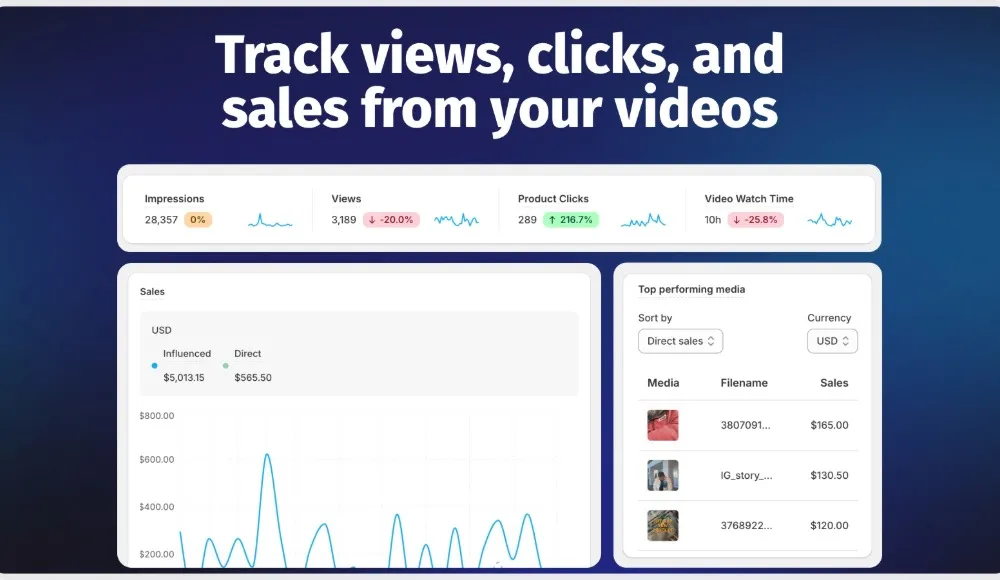
Moast is one of the more straightforward Videowise alternatives for Shopify merchants who primarily need shoppable video carousels.
Its free plan includes unlimited video views, Instagram and TikTok imports, product tagging, basic analytics, and unlimited widgets, with up to 10 videos per widget. Merchants can display these widgets on product pages, collection pages, and other storefront sections.
The $15/month Pro plan removes the per-widget video limit and adds multiple product tagging, customer UGC collection, advanced customization, and more detailed analytics.
Moast’s free unlimited-view allowance is attractive compared with apps that charge based on video impressions or viewers. Still, its functionality is more focused than Videowise’s broader suite. If you mainly want to turn existing Reels into shoppable product videos, Moast may provide everything you need.
5. Whatmore — Best for Social Video Automation
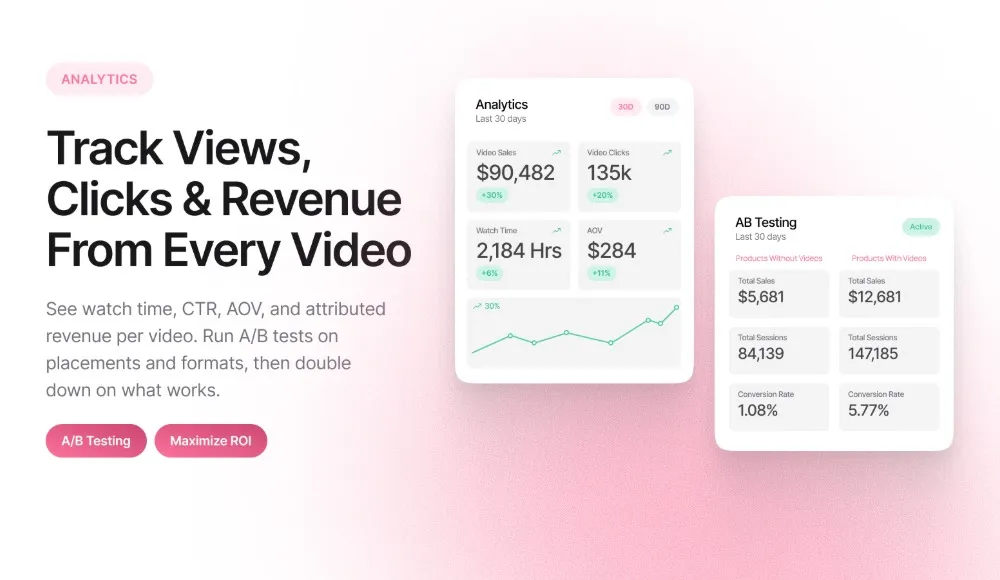
Whatmore suits Shopify stores that frequently publish new Instagram and TikTok content and want those videos to appear on their website without repeated manual uploads.
It supports automated Instagram syncing, AI-assisted product matching, shoppable carousels, floating videos, stories, and product galleries. Higher plans also offer email video embedding, retargeting, A/B testing, and advanced analytics.
This is especially useful for stores that already use shoppable Instagram videos in their marketing. Instead of uploading every new Reel separately, merchants can maintain a more consistent flow of content between Instagram and their storefront.
Whatmore has a free plan with 300 video clicks per month and up to 15 video uploads. Its $29/month Starter plan increases this to 3,000 monthly clicks, 100 uploaded videos, and daily Instagram syncing.
Unlike Videowise’s impression-based entry pricing, Whatmore uses video clicks as a key billing allowance. Merchants should compare expected usage rather than assuming the two metrics represent the same amount of traffic.
Whatmore is a practical option for stores where keeping video galleries updated and matching content to products takes considerable time.
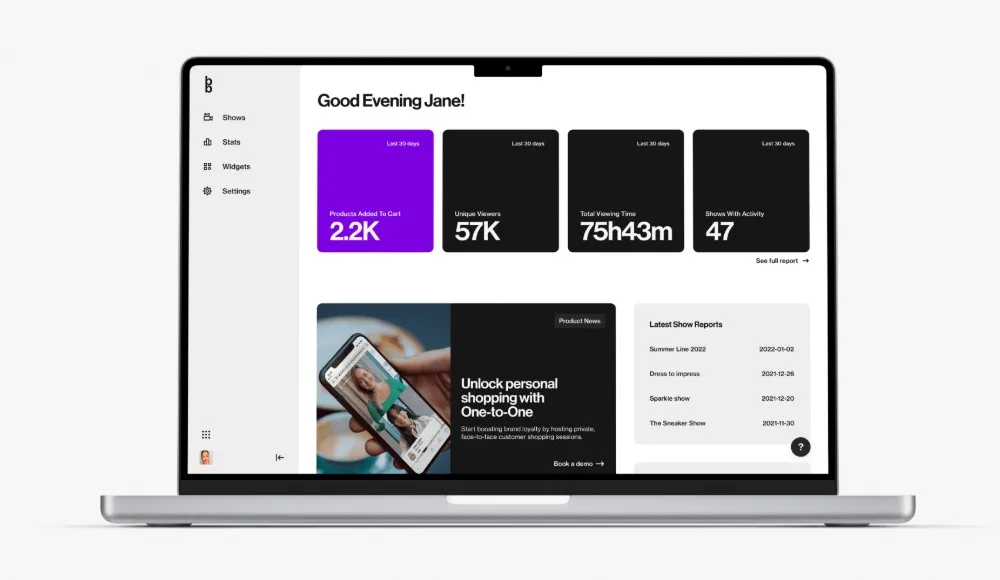
Bambuser is particularly relevant to brands that host product launches, demonstrations, and interactive shopping events.
Its Shopify app supports live broadcasts, shoppable product cards, social video imports, and in-player checkout. Merchants can also use recorded content as shoppable videos after a live event.
The free plan includes live shopping, shoppable video, and 250 monthly views. Essential costs $79/month and adds features such as social UGC imports, AI subtitles, and performance analytics. Growth costs $249/month and includes multistreaming to social channels.
Bambuser is a stronger choice when live selling is an established part of the business. However, merchants interested only in prerecorded product videos may find its livestream-focused functionality unnecessary. The free plan’s viewing allowance is also limited for stores expecting substantial traffic.
7. Firework — Best for Interactive Video Commerce
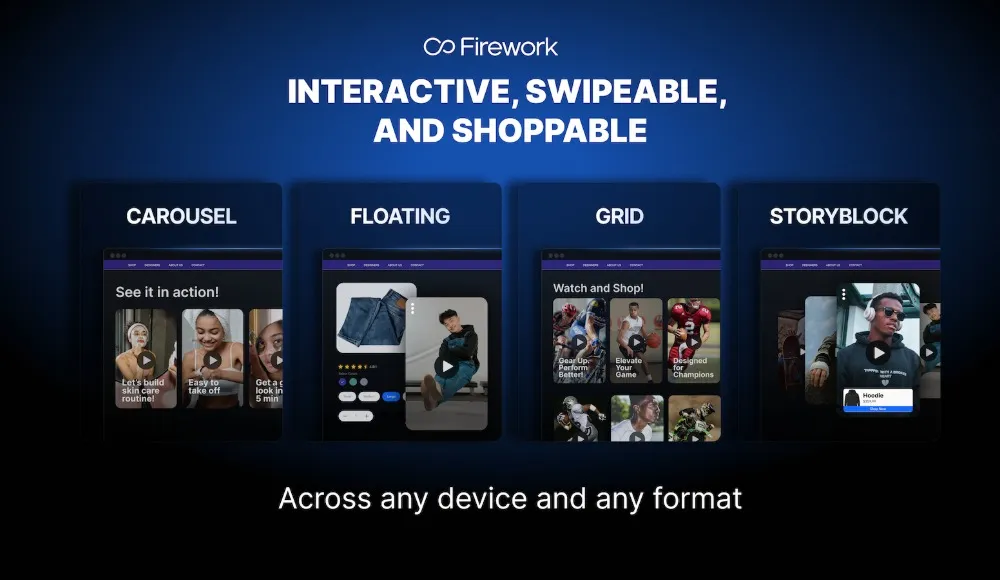
Firework supports shoppable videos, UGC galleries, product demonstrations, and interactive experiences such as quizzes and polls.
Its Shopify integration also connects with Klaviyo, allowing businesses to use video interactions within email marketing workflows. Videos can be displayed across storefront pages and Shopify’s Shop app, rather than being restricted to product detail pages.
The platform is particularly relevant to retailers exploring different shoppable video examples and formats, from simple product demonstrations to interactive shopping experiences. Firework allows merchants to extend that content into different stages of the buying journey.
Firework’s free Pilot plan includes 1,000 monthly views and 10 video uploads. Starter costs $39/month with 10,000 monthly views and 50 uploads. Growth costs $259/month and includes 50,000 monthly views and unlimited uploads.
Firework is better suited to businesses that want video content across several customer touchpoints. Stores requiring only basic Reels or product video carousels may not need its wider interactive capabilities.
8. JOIN Stories — Best for Multi-CMS Video Commerce
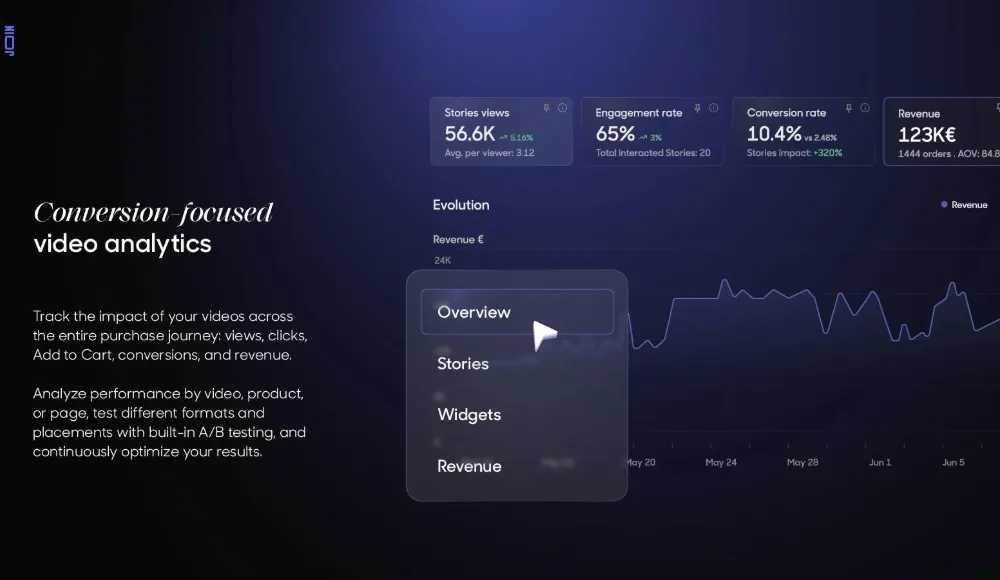
JOIN Stories helps merchants publish shoppable videos, product stories, and interactive content across ecommerce websites.
Its platform supports Shopify, PrestaShop, and other storefront environments through product feeds and integration methods. It also offers AI-generated product visuals, content management, and video analytics.
JOIN is particularly relevant to retailers operating more than one ecommerce platform. Rather than managing a completely separate video publishing system for each store, teams can connect product information and distribute content through compatible integrations.
For businesses also operating a WooCommerce store, the process of adding shoppable videos to WooCommerce illustrates the integration details worth checking, particularly product catalog syncing, clickable tags, and publishing methods.
JOIN’s Shopify Starter plan costs $99/month and includes 50,000 monthly impressions, shoppable widgets, and standard analytics. The $249/month Growth plan adds product matching, Add to Cart functionality, AI subtitling, and advanced analytics.
That last distinction matters: merchants who need customers to add products directly from videos should evaluate Growth rather than assuming every shopping feature is included in Starter.
JOIN is worth considering when multi-platform compatibility and video management are priorities, although its advanced commerce features increase the subscription cost.
Which Videowise Alternative Should You Choose?
If your main requirement is to turn existing social content into shoppable product galleries, Taggbox is a good option, especially when you need to publish content across different website platforms.
For Shopify merchants, the choice depends more on functionality and budget. Moast provides an accessible starting point for basic shoppable videos, while LyveCom offers a broader video commerce setup. Whatmore is better suited to stores that regularly publish social content and want automated imports and product matching.
Tolstoy is worth considering when AI-assisted content creation is important. Bambuser is the more specialized option for live shopping, while Firework and JOIN Stories suit businesses with wider video commerce or integration requirements.
Before switching from Videowise, confirm what each plan includes and how additional usage is charged. Check whether your existing videos can be imported, how products and variants are connected, and whether the platform supports the buying experience you want. If you’re republishing customer or creator content, make sure you have the necessary UGC usage rights and permissions.
The right alternative isn’t necessarily the one with the most features. It’s the one that handles your store’s actual video commerce requirements without making you pay for capabilities you won’t use.
Considering a Switch from Videowise?
See how Taggbox can help you collect, manage, and publish shoppable UGC across your storefront. Explore the features and setup with our team before making the switch.
Book a Demo