Shoppable video is an interactive format that lets viewers discover and buy products directly while watching. It uses clickable product tags, hotspots, and add-to-cart buttons to turn video views into purchases without sending shoppers to another page. Brands can also use built-in analytics to see which products and parts of the video drive the most engagement and sales.
Shopping habits have changed fast. People don’t want to leave a video to go search for something they liked. They want to see it and buy it right then, without breaking their scroll. That shift is exactly why more brands are investing in shoppable video in 2026. But what exactly is a shoppable video, and how do you build one that actually delivers ROI and increases AOV?
We’ll cover the details ahead: what it is, the format, how it works, and how you can set one up for your brand.
What Is a Shoppable Video?
Shoppable video takes a regular video and layers in the details a shopper needs to buy: product name, colour, price, size, and a direct link, all embedded right into the video itself. There’s no cutting to a product page or hunting through a caption for a link. Built-in analytics are the cherry on top, tracking impressions and product performance so brands know exactly what’s converting. This approach is especially valuable for shoppable UGC, where authentic user-generated content can become directly shoppable without disrupting the viewing experience.
An example to help you understand better:
Hyue, a leading brand offering high-performance beauty solutions, used Taggbox to build a UGC and social media aggregator that turned real customer and creator content into shoppable video galleries on their site. They moderated and handpicked high-quality posts, then curated them into an engaging, on-brand feed directly on their product pages.
This helped them achieve:
- 17.2K Widget Views
- 29.3K Total Clicks
- 171% Click-Through Rate (CTR)
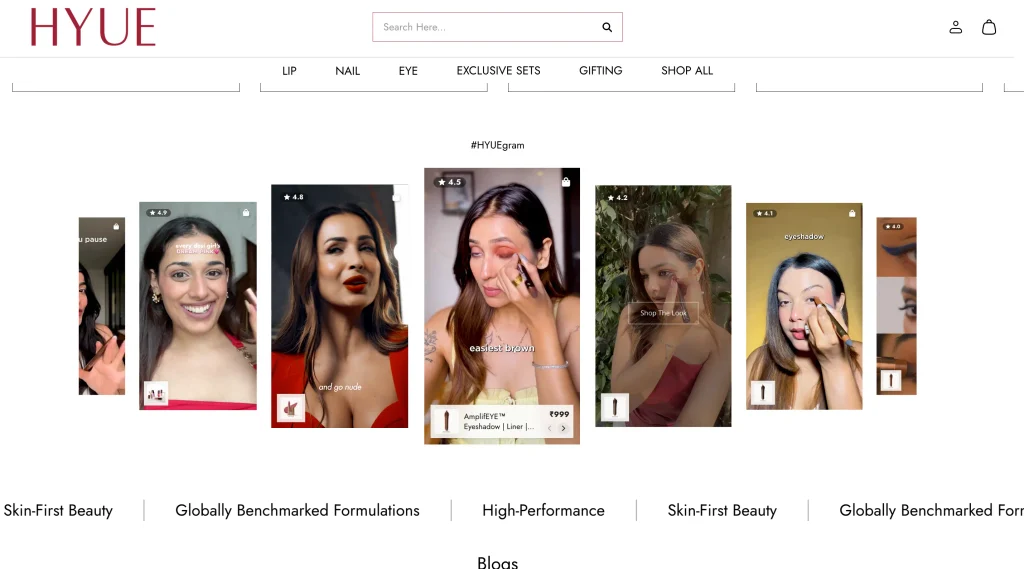
Hyue’s homepage shoppable video gallery lets shoppers browse creator content and instantly shop featured products, with a “Shop The Look” tag on every video.
See How Shoppable Gallery Will Look On Your Website
Get Demo
What Are the Shoppable Video Benefits for Customers and Brands?
Now that you know what is a shoppable video, let’s see the benefits it brings for your customers and your entire business.
| For Brands | For Customers |
| Higher ROI from content you already have | Skip the search, buy the exact product instantly |
| Boosts AOV, shoppers add more per visit | See its live use before adding to cart |
| Increases session time, viewers linger & browse | Get honest context, reduces “not what I expected” |
| Cuts return rates, buyers see the product truly | Discover new products naturally while just watching content |
| Real-time analytics show exactly what’s converting best | Faster checkout, no app-switching or endless scrolling |
Benefits of Shoppable Videos for E-commerce
Online Conversions & Higher Engagement: For an e-commerce store, every extra click between “I like this” and “I bought this” is a chance to lose the sale. Shoppable video closes that gap; shoppers can buy the exact product they’re watching without leaving the video or searching your catalog. This directly helps drive e-commerce conversions, something only possible in a digital storefront, and keeps shoppers engaged with your content for longer.
Stronger Brand Storytelling & Customer Loyalty: Shoppable video lets brands tell their story through real customer and creator content instead of static product photos, turning the shopping page into something people really want to browse. Over time, this approach builds familiarity and trust with an online-only audience, increasing repeat visits and customer loyalty. This is especially true for D2C brands, which rely entirely on their site to build the trust a physical store gets for free.
Product Discovery: In e-commerce, shoppers only see what they search for or what’s pushed to them. Shoppable video fills this gap, letting shoppers discover products naturally while watching content they’re already interested in, surfacing items they’d never have searched for directly and expanding what they add to their cart.
Decision Making: Every view, click, and product tag interaction on a shoppable video generates data specific to online shopping behavior. Ecommerce brands can use this data to see exactly which products, formats, and content styles drive purchases, then refine marketing strategy, ad targeting, and even inventory decisions based on real shopper behaviour.
What Are The Key Shoppable Video Features?
These shoppable video features help your brand perform better and reach more people. They enhance engagement, build trust and eventually help you increase your average order value.
- Tag Multiple Products: Add clickable tags to every product visible in a single frame so users can explore and buy each item individually, without splitting or re-cutting the video for every product.
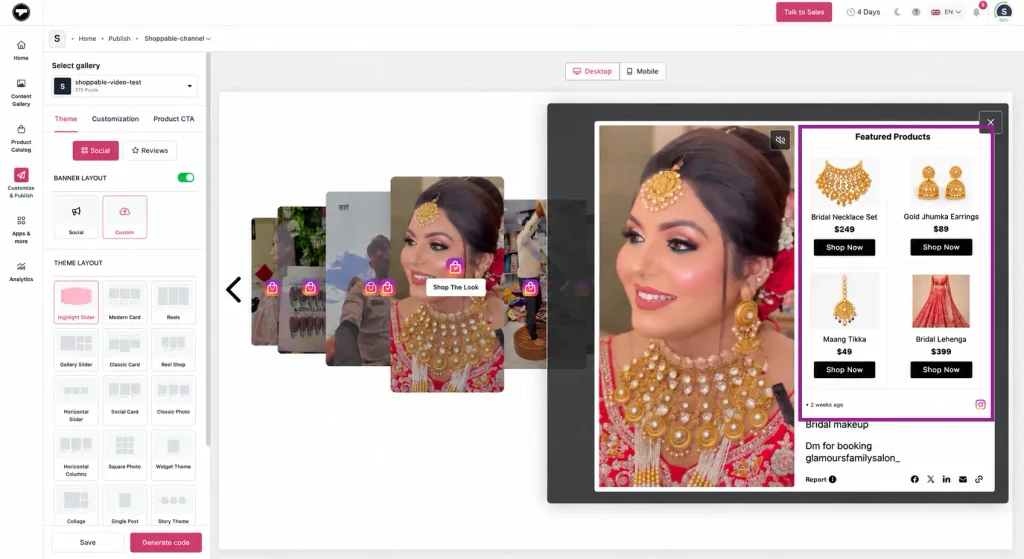
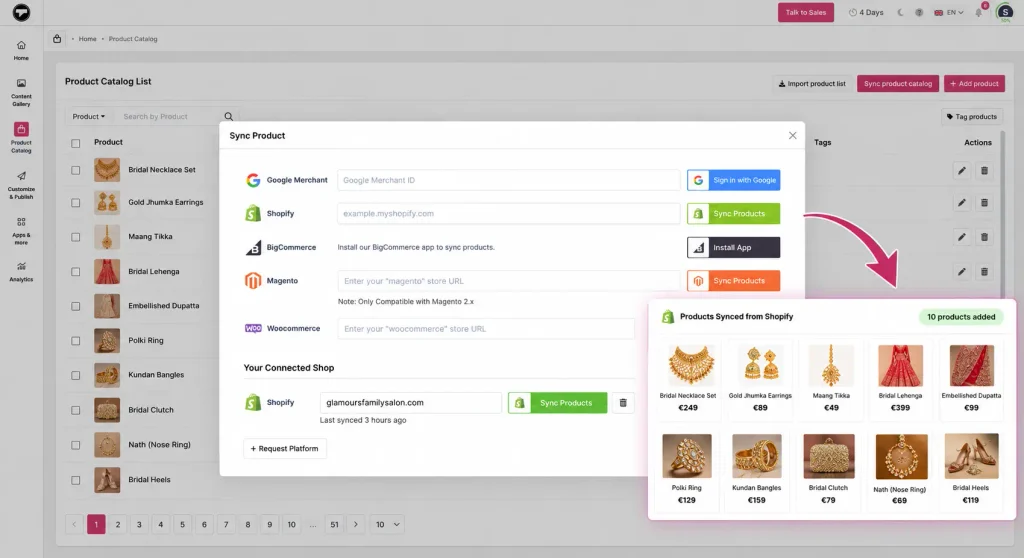
- Product Catalog Sync: Once connected to your store, prices, SKUs, URLs, stock status, and categories stay accurate and automatically refreshed.
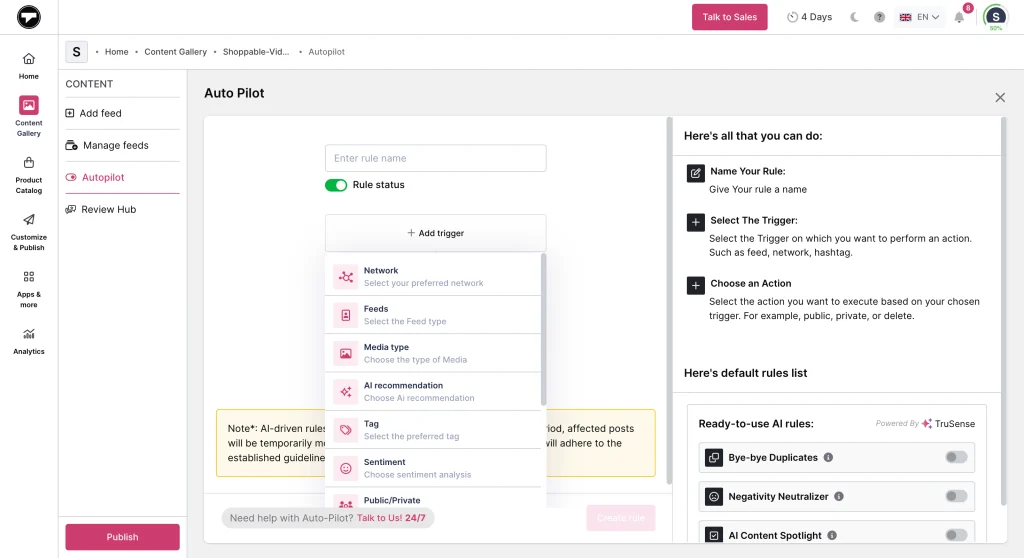
- Smart Moderation: Every video can be reviewed and approved through AI-assisted moderation before it goes live, automatically filtering out low-quality or off-brand content.
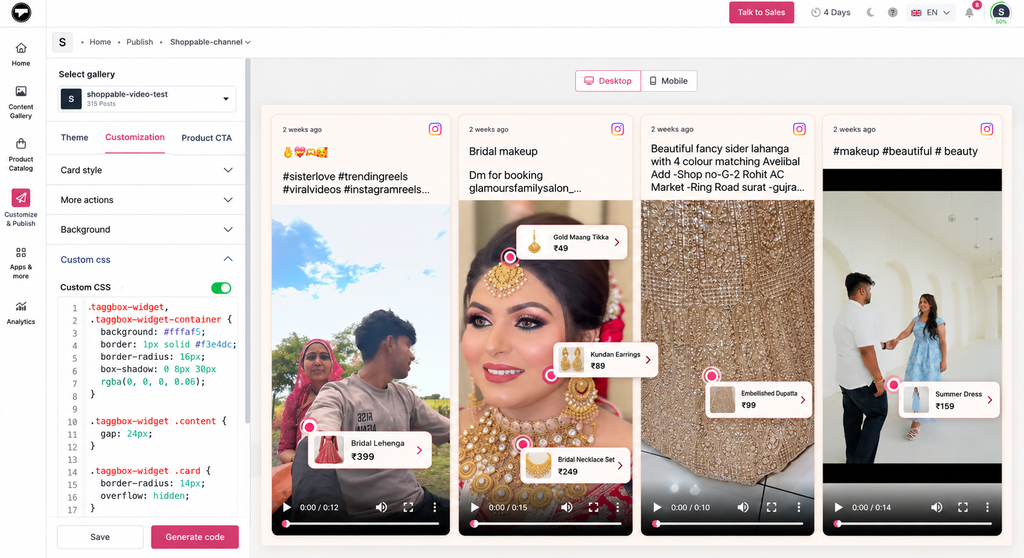
- Customizable Widgets: Match video players and tag styles to your brand’s fonts, colours, and layout, keeping the shoppable video experience feeling native to your site.
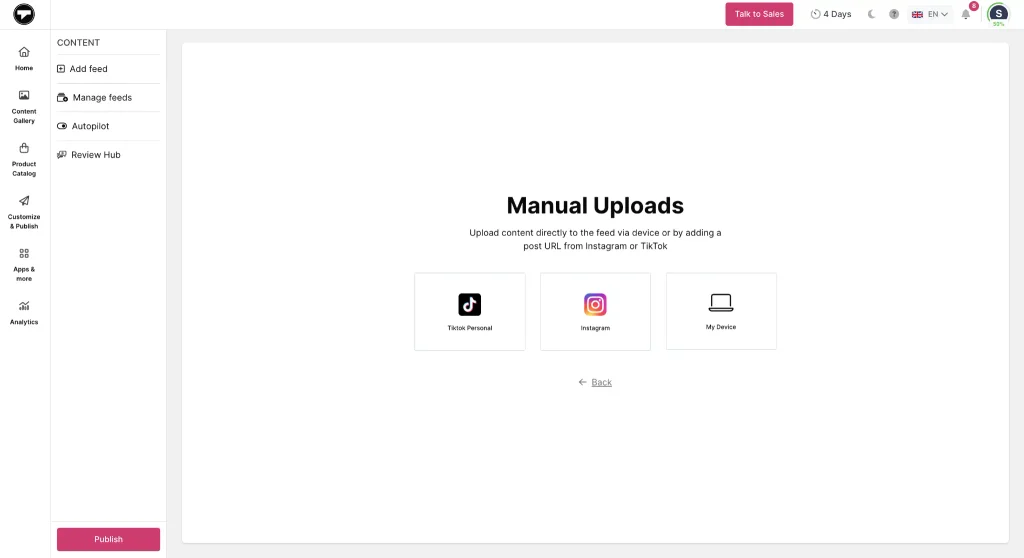
- Social Media Import: Get UGC or creator content directly from Instagram, TikTok, or YouTube for tagging, without manual downloads and uploads.
- Multi-Page Embedding: Embed the same shoppable video across product pages, homepage, landing pages, or even email campaigns without re-uploading.
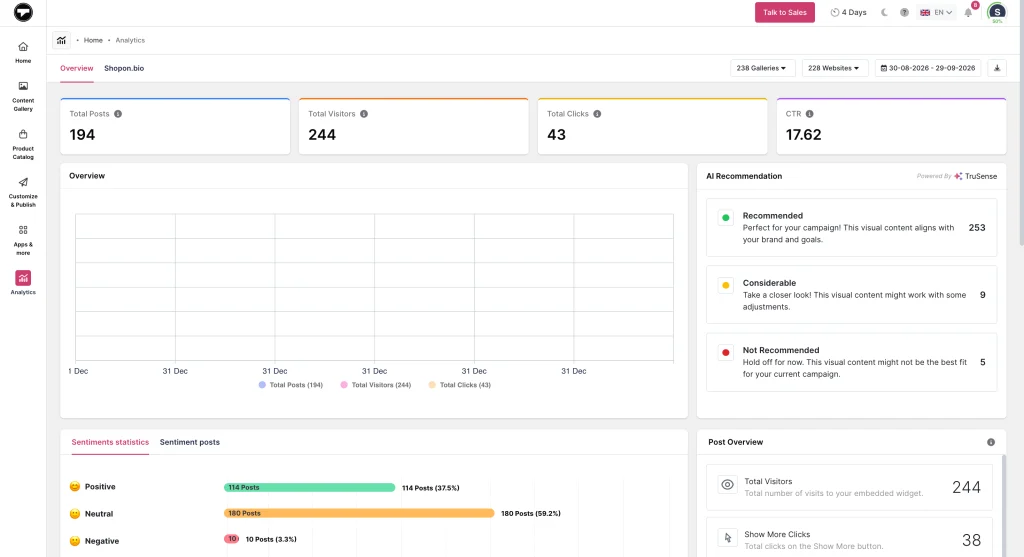
- Video Analytics Dashboard: Track views, clicks, CTR, and product-level performance for every video in one place, making it easy to see which content and products are increasing purchases.
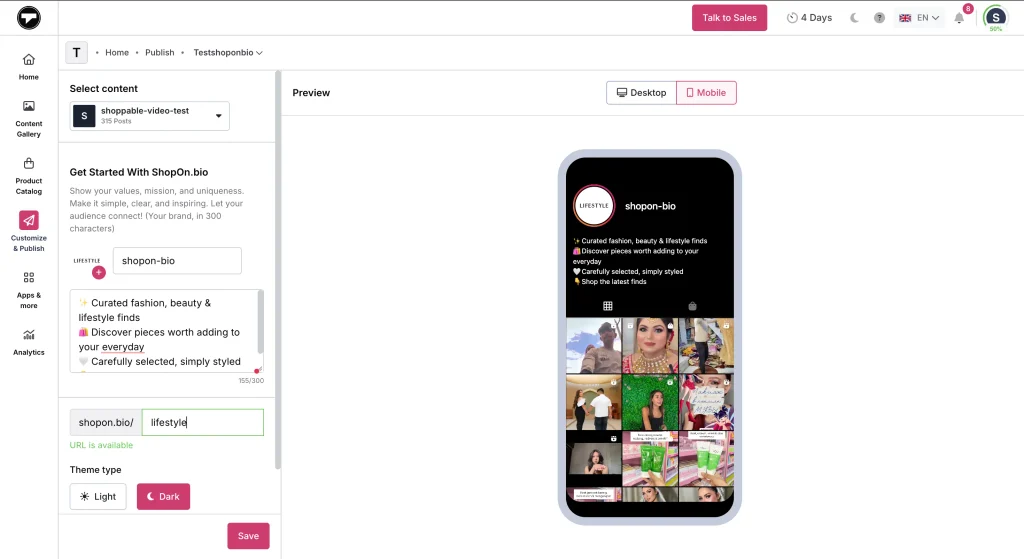
- Shop On Bio: Turn your social media content into a shoppable storefront by giving it a unique page, making it easy for people to discover and buy your products
What Are The Sources of Shoppable Video Content?
You don’t always need to create new videos for a shoppable experience. Brands can turn existing social content, UGC, creator videos, and their own video assets into shoppable videos. Here are some examples:
| Content Source | What You Can Use |
| Instagram | Reels, Stories, UGC, and tagged posts |
| TikTok | TikTok videos, creator content, and UGC |
| YouTube | Shorts, product demos, reviews, and tutorials |
| Facebook | Videos, UGC, and creator content |
| Pinterest | Product videos and visual content |
| Direct Uploads | Product demos, campaigns, tutorials, and brand videos (Videos from your device or other storage sources) |
The idea is simple: bring your best-performing video content into one place, moderate what you want to show, tag the products featured in each video, and turn it into a shoppable experience.
Depending on your content and goals, shoppable video types range from quick UGC clips to full live shopping events. Here are the most common shoppable video formats brands use today:
- UGC Shoppable Videos: Real customer or creator content, browsed on Instagram, TikTok, or YouTube, and tagged with the featured products. These convert well since they carry built-in trust and shoppers see a real person using the product.
- Product Demo Videos: Common for beauty, tech and home goods, where seeing the product move or be applied makes a bigger difference than a static image ever could.
- Shoppable Reels & Stories: Short-form, vertical video repurposed from social content and made tappable directly on a brand’s site. These mimic the scroll-and-shop behavior shoppers are already used to from Instagram and TikTok, just embedded on-site instead.
- Live Shopping Videos: Live-streamed shopping events where a host demonstrates products in real time, and viewers can buy instantly as items are shown, sometimes through comment-to-buy, sometimes through in-stream checkout.
- Lookbook & Outfit Videos: Common in fashion and beauty, these videos show multiple products styled together, an outfit, a full face of makeup, and a room setup, with each item tagged separately.
- Tutorial & How-To Videos: Step-by-step videos, such as a skincare routine or a styling tutorial, with each product used at each step tagged as it appears, letting shoppers buy along the way.
- Testimonial & Review Videos: Viewers get convinced by the review and can buy immediately instead of searching for the product separately.
- Behind-the-Scenes Videos: These build trust and brand storytelling, and work well when tagged with the exact product being featured.
How AI Search Is Changing the Way Shoppable Video Performs
AI Overviews, SGE, and AI voice assistants now pull directly from content that answers questions clearly and fast, and shoppable video fits that shift well. A video with clear product tags, on-screen text, and structured metadata gives AI search something concrete to reference, unlike a plain product photo.
With the shoppable market projected to reach $12.4B by 2028, brands optimizing for both shoppers and AI search now will have a real head start.
Shoppable Video vs Traditional Video
| Aspect | Shoppable Video | Traditional Video |
| Product Context | Shows products in use with action | Shows products in use |
| Purchase Path | Buy directly in the video | Visit a separate page to see product |
| Discovery | Discover products while watching | Discover products through content |
| Trust | UGC and creator content | Brand-led content |
| User Experience | Interactive and immersive | Primarily focused on viewing |
| Content Format | Interactive, video-first | Video-first |
| Shopping Journey | Discovery to purchase in one flow | Requires extra steps to purchase |
| Analytics | Views, clicks, product interactions | Views, watch time, engagement |
A shoppable video platform is a software tool that turns any video into a point of sale. Instead of manually embedding product tags one by one, the platform handles it for you, adding clickable product links, pricing, sizing, and a checkout button directly on the video so viewers can purchase without leaving the screen they’re watching.
- Reduces friction: Shoppers buy in one tap, no page-hopping or manual search.
- Saves time: Automated tagging beats manually tagging every product, video by video.
- Scales easily: Tag hundreds of videos without adding to your team’s workload.
- Better analytics: Platforms like Taggbox offer Google Analytics integration for deeper tracking.
- Consistent tagging: Ensures every video across your site follows the same format.
- Works across content types: UGC, creator content, and in-house videos all tag the same way.
- Higher content ROI: Old videos get a second life as active selling assets.
Get The Free Platform Selection Checklist Before You Start
Send me the checklist
The ideal platform for your brand depends on your current needs and future goals. While there are multiple best shoppable video platforms on the market right now, here are some of the best that we’ve listed:
Taggbox: Taggbox lets brands go live with shoppable UGC galleries at a minimal cost, then scale affordably as content and traffic grow. It combines social content aggregation, AI-powered tagging, and analytics in one platform built specifically around monetizing content brands already have. It’s compatible with all website builders, including WordPress, Shopify, Wix, and many more.
Tolstoy: Tolstoy is the most widely installed shoppable video app on Shopify, known for fast native setup and an accessible entry price. It leans more toward interactive, branching video experiences than large-scale UGC aggregation, making it a strong pick for stores wanting quick wins.
Quinn.live: Quinn positions itself as a lightweight, flat-priced alternative focused specifically on making Reels and TikToks shoppable through carousels, stories, and widgets. It’s built for speed and simplicity rather than deep content moderation or large-scale aggregation.
eStreamly: eStreamly differentiates itself by generating shoppable videos directly from product URLs or images using AI, rather than only tagging existing footage. This makes it a stronger fit for brands without a steady UGC pipeline.
Videowise: Videowise combines shoppable video, UGC management, and live shopping with a strong emphasis on conversion tracking. It’s a solid fit for performance-focused teams that want granular revenue attribution built into the platform.
Bambuser: Bambuser is one of the original names in live shopping, built around livestream commerce and later expanded into shoppable video and clienteling. It’s a common choice for global retailers running virtual launches and events.
Reina Olga Increased its Revenue by 21.67% With Taggbox Shoppable Gallery
Reina Olga, a luxury swimwear brand renowned for its bold, stylish designs, sought to integrate authentic customer stories into its digital strategy.
They integrated Taggbox’s shoppable Instagram UGC galleries to transform its e-commerce homepage. By curating authentic visual content from social media under the brand’s hashtag #ROGirls, the brand created an immersive gallery that showcased products in real-world use.
The brand achieved:
- 21.67% Revenue Growth
- +12% Average Order Value
- +16K Post Clicks/Month

Reina Olga’s “#ROGirls” Instagram gallery turns real customer photos into a shoppable feed, letting shoppers tap the bag icon on each image to buy the featured beachwear directly.
How to Make a Shoppable Video in 4 Steps
Shoppable video production doesn’t always mean creating new videos from scratch. Brands can turn existing UGC, creator content, product demos, and social videos into shoppable experiences. Knowing how to make shoppable video content comes down to four simple steps. With Taggbox, you can turn existing video content into a fully tagged, on-brand shoppable video in just a couple of minutes.
Step 1: Collect the content
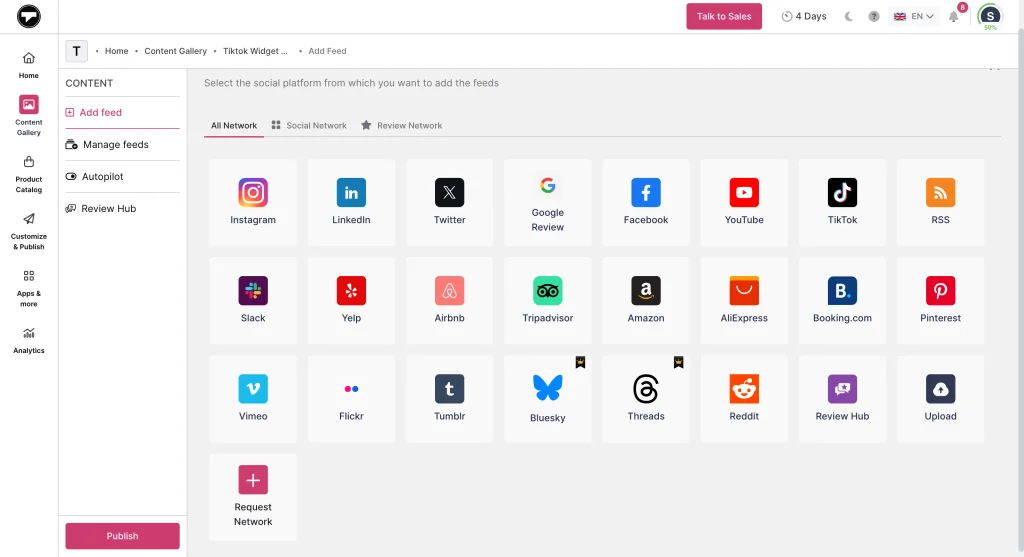
Start with existing video content, whether that’s UGC, creator content, or your own product videos.
Step 2: Curate & moderate
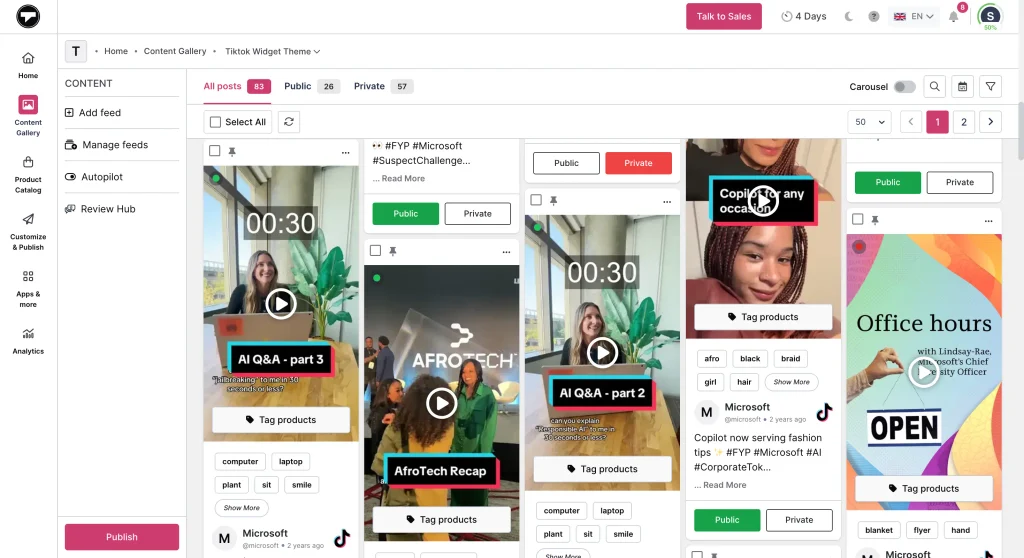
Filter for high-quality, on-brand content and moderate it so only the best videos make it to your storefront or landing page.
Step 3: Tag the products
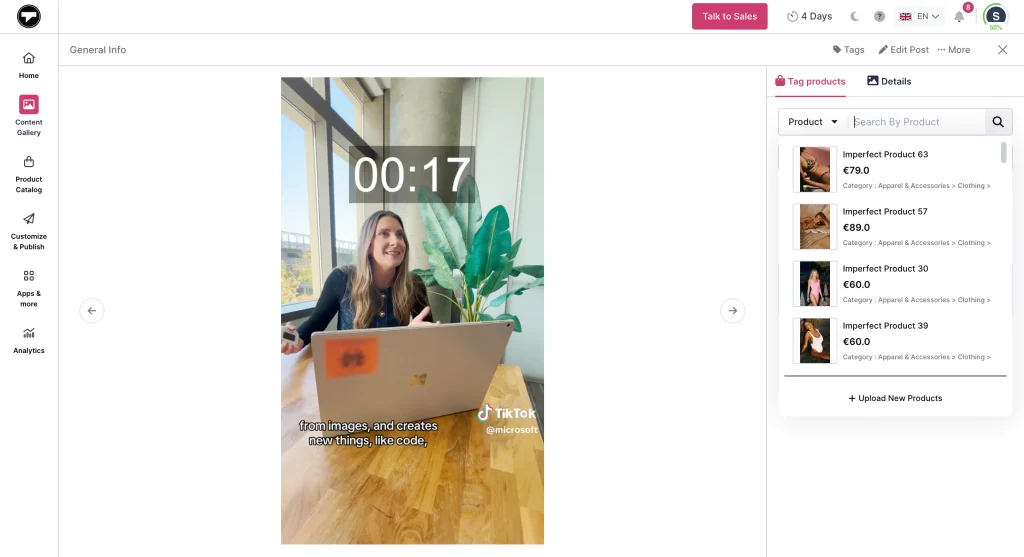
Each product shown is pinned with clickable tags, hotspots, or add-to-cart buttons, mapped to the correct SKU, price and size.
Step 4: Track and optimize
Once live, analytics kick in, tracking views, clicks, and CTR on every video and tag. Brands can see which shoppable content and which products are actually converting, and double down on what’s working.
Start Building Your First Shoppable Video With Taggbox
Start Free
Shoppable Video Embedding Challenges & Their Solution
Technical Complexity
Setting up shoppable video often means managing multiple moving parts at once: catalog integration, tagging accuracy, video hosting, and cross-device rendering. Brands without a dedicated dev team can find this overwhelming, especially if they’re trying to build it in-house from scratch.
The Solution: Choose a no-code platform, so your team doesn’t need to build or maintain the technical backend. Look for one with e-commerce sync and AI-powered tagging built in, so most of the heavy lifting happens automatically instead of falling on your dev team.
Proving ROI
It’s not always easy to tie shoppable video directly to revenue, especially early on. Brands often struggle to justify continued investment when performance data is scattered across the video platform, analytics tools, and the store itself, making it hard to see a clear before-and-after picture.
The Solution: Use a platform with built-in analytics that tracks views, clicks, CTR, and product-level performance in one dashboard, ideally one that also integrates with tools like Google Analytics. This makes it easier to connect shoppable video activity directly to conversions and present clear ROI to stakeholders.
Content Sourcing at Scale
Once a brand sees results, the next challenge is keeping up, sourcing and tagging enough fresh content to keep the gallery active without it becoming a full-time job for someone on the team.
The Solution: Opt for UGC and creator content instead of relying solely on in-house shoots, and use AI tagging and moderation to reduce the manual work of reviewing and tagging every new video.
Maintaining Consistency
As more videos get tagged and published, keeping tag placement, pricing accuracy, and brand styling consistent across dozens or hundreds of videos becomes harder to manage manually.
The Solution: Use a platform with catalog sync and customizable, reusable widget templates, so pricing stays accurate automatically and every video follows the same branded look without manual double-checking.
Conclusion
We’ve seen what is a shoppable video, its benefits, how to embed it and how to fix things that could go wrong.
Now, it all comes down to understanding that the shift toward video commerce is changing how brands sell online. Shoppable video is quickly becoming the baseline shoppers expect. Every scroll, every “how do I get this” comment, every product tagged in a video someone didn’t even mean to buy from, it all points to the same thing: the gap between discovering a product and buying it is closing.
The brands getting this right are the ones making the most of the content they already have: real customer videos, creator content, and everyday product moments, and turning it into something shoppable without adding months of dev work or a whole new content pipeline.
And that’s what Taggbox does for you (though what you read is only the top of the iceberg). From aggregating UGC to AI-powered tagging to analytics that show what’s actually converting, it’s built so any brand, regardless of team size, can go from “we have great video content” to “our video content sells” in minutes.
If you’ve read this far, you already know shoppable video isn’t optional for 2026. The only real question left is how fast you get started.